Appointments →

Call Us At:
013 243 1632 or 086 166 4664

Queries →

Email Us At:
office@drcronje.com

Office Hours

Mon - Fri: 8:00 AM - 5:00 PM
Sat: By Appointment Only

Cataract diagnosis

Cataract diagnosis

Cataract diagnosis involves a detailed assessment of the eye to confirm the presence of lens clouding and determine how it is affecting vision. While screening may identify early changes, diagnosis focuses on accurately evaluating the type, extent, and functional impact of cataracts, as well as identifying any other conditions that may be contributing to visual symptoms.

What is involved in cataract diagnosis?

Cataract diagnosis is a comprehensive ophthalmic evaluation that goes beyond basic screening. It aims to: Confirm whether cataracts are present, Assess how significantly they are affecting vision, Determine whether other eye conditions are involved, Guide decisions regarding monitoring or treatment

When is a diagnostic assessment needed?

A full diagnostic evaluation is typically recommended when:

  • Screening suggests cataracts may be present
  • Vision changes are affecting daily activities
  • Symptoms are progressing or becoming more noticeable
  • There is uncertainty about the cause of visual symptoms

This ensures that the correct diagnosis is made before any treatment decisions are considered.

What happens during cataract diagnosis?

A comprehensive diagnostic assessment may include:

Visual acuity testing

Measures how clearly you can see at different distances.

Slit-lamp examination

Allows detailed evaluation of the lens, including:

  • Location of the cataract
  • Density and extent of clouding

Dilated retinal examination

The pupils may be dilated to allow examination of the retina and optic nerve.

This helps ensure that:

  • Cataracts are the primary cause of symptoms
  • No underlying retinal or neurological conditions are missed

Functional vision assessment

Evaluates how vision is affected in real-world situations, such as:

  • Reading
  • Driving
  • Working on screens

View VideoShows how the slit lamp exam works, by directing a beam of light on the eye, allowing for inspection of structures on the front part of the eye, including the conjunctiva, eyelids, cornea, iris, and lens.

What your doctor is assessing

During diagnosis, several important factors are considered:

  • The type and location of the cataract
  • The degree of visual impact
  • The rate of progression
  • The presence of other eye conditions

This ensures that any management plan is appropriate and tailored to your specific situation.

Outcomes of a diagnostic assessment

Following diagnosis, one of the following approaches is usually recommended:

Monitoring

If cataracts are present but not significantly affecting vision.

Non-surgical management

Such as updating glasses or modifying visual tasks in early stages.

Surgical consideration

If cataracts are significantly affecting daily function.
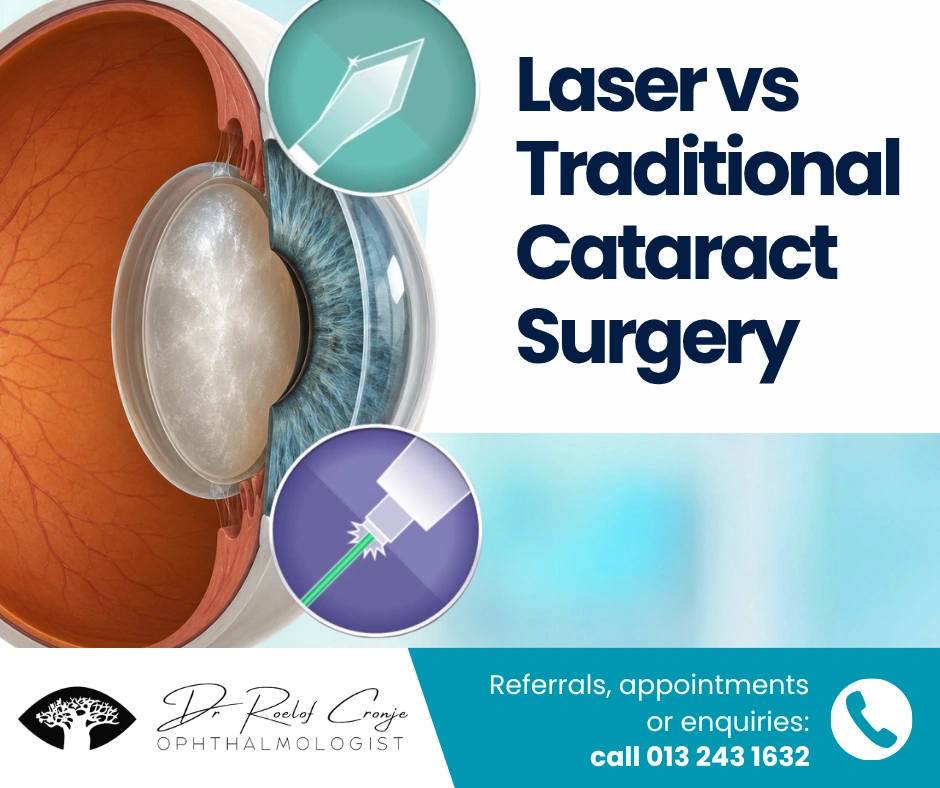
What this means for you

Cataract diagnosis provides clarity — not just about whether cataracts are present, but about how your vision is functioning and what the most appropriate next step may be. Accurate diagnosis ensures that treatment decisions are made at the right time and for the right reasons.

Related FAQ's

Can both eyes be treated at the same time?

Can You Renew Your Driver’s License with Cataracts?

Appointments →

Call Us At:
013 243 1632 or 086 166 4664

Queries →

Email Us At:
office@drcronje.com

Office Hours

Mon - Fri: 8:00 AM - 5:00 PM
Sat: By Appointment Only

Scan the code