
Call Us At:
013 243 1632 or 086 166 4664
Email Us At:
office@drcronje.com
Mon - Fri: 8:00 AM - 5:00 PM
Sat: By Appointment Only
Home | Eye Conditions
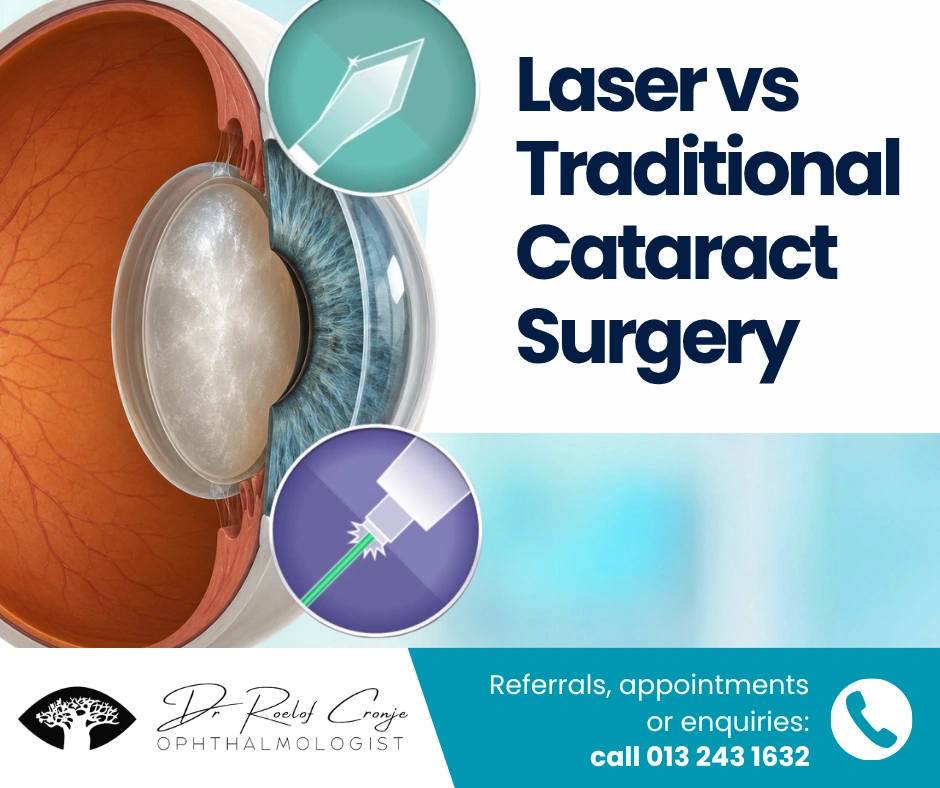
The lens is a clear structure inside the eye that focuses light onto the retina. When it becomes cloudy or loses its normal function, vision may appear blurred, dull or affected by glare.
Cataracts are the most common lens condition and typically develop gradually with age, although they may also occur earlier due to diabetes, trauma or medication use.
Other lens-related conditions, such as presbyopia or lens displacement, can also affect focusing.
Not all lens conditions require surgery—many are managed with optical correction or monitoring—but when cataracts significantly affect vision, surgery is a safe and highly effective treatment to restore clarity.
Glaucoma is a group of eye conditions that damage the optic nerve, often associated with increased pressure inside the eye. It typically develops slowly and may not cause noticeable symptoms in the early stages, making regular screening essential—especially for those at higher risk.
As the condition progresses, it can lead to gradual loss of peripheral (side) vision, and if left untreated, permanent vision loss. Because this damage is irreversible, early detection and ongoing monitoring are critical.
Treatment focuses on lowering eye pressure to slow or prevent further damage and may include eye drops, laser therapy or surgery, depending on the type and severity of glaucoma.
The retina is the light-sensitive layer at the back of the eye, while the macula is responsible for detailed central vision.
Conditions affecting these structures, such as age-related macular degeneration and diabetic retinopathy, can lead to blurred, distorted or reduced vision.
Some diseases develop gradually, while others may cause sudden changes, including flashes, floaters or vision loss. Early detection is essential, as timely treatment can help preserve vision and prevent progression.
Management may include monitoring, medical treatment, laser therapy or injections, depending on the condition and its severity.
Diabetes can affect the small blood vessels of the retina, leading to changes that may threaten vision over time.
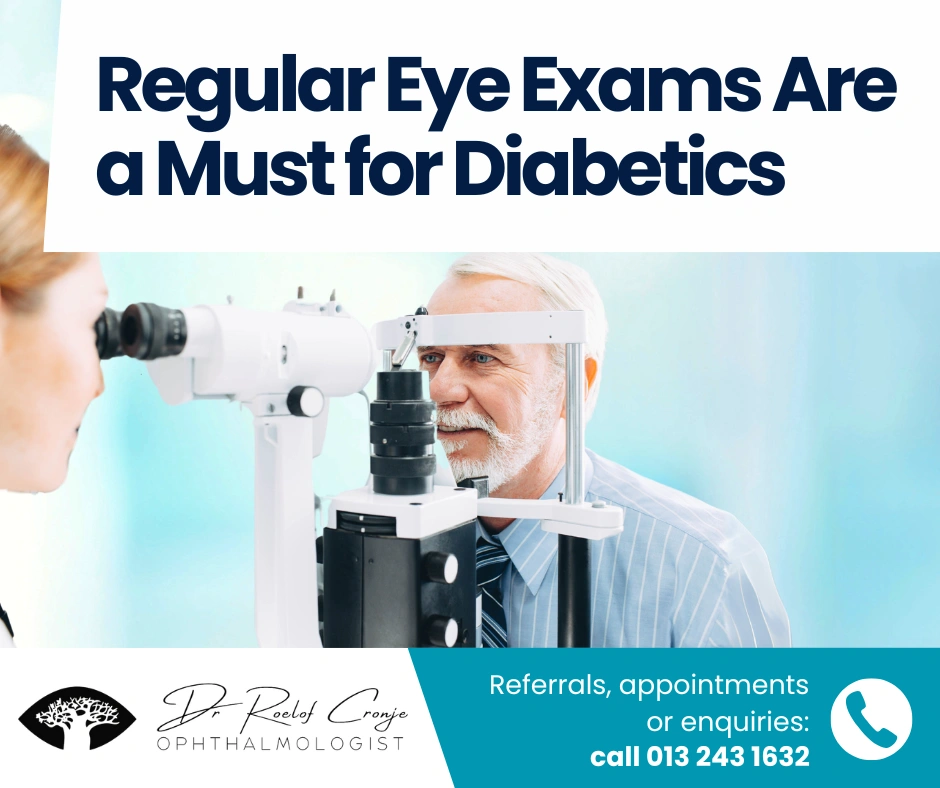
Conditions such as diabetic retinopathy and diabetic macular oedema can develop gradually and often have no symptoms in the early stages. As the disease progresses, patients may notice blurred vision, fluctuating vision, dark spots or difficulty seeing clearly.
Regular eye examinations are essential for early detection, as timely treatment can help prevent or slow vision loss.
Management may include monitoring, injections or surgery, depending on the severity and progression of the condition.
Neuro-ophthalmic conditions affect the connection between the eyes and the brain, involving the optic nerve, visual pathways and eye movement control.
These conditions may present with symptoms such as vision loss, double vision, visual field defects or abnormal eye movements.
Causes can include neurological disease, vascular events, inflammation or compressive lesions. Some conditions develop gradually, while others may present suddenly and require urgent evaluation.
Careful assessment is essential to determine the underlying cause and guide management. Treatment depends on the diagnosis and may involve monitoring, medical therapy or referral for further neurological investigation and care.
Eye conditions in children can affect visual development and long-term vision if not identified early.
Problems such as refractive errors, amblyopia (lazy eye), strabismus (eye misalignment) and congenital abnormalities may present subtly and are not always obvious to parents or caregivers.
Children may not report vision problems, so changes in behaviour, eye alignment or visual performance can be important signs.
Early detection is critical, as treatment is often most effective during key stages of visual development. Management may include glasses, patching, monitoring or referral for specialist care depending on the condition and severity.
The cornea and ocular surface play a critical role in focusing light and maintaining eye comfort.
Conditions affecting this area, such as dry eye disease, infections, inflammation and corneal disorders like keratoconus, can lead to irritation, redness, blurred vision and light sensitivity.
Some conditions develop gradually, while others may present acutely with pain or visual disturbance. Because the cornea is highly sensitive, even minor abnormalities can significantly affect vision and comfort.
Early diagnosis is important to prevent complications and preserve visual quality. Management may include lubricants, medication, specialised contact lenses or surgical intervention depending on the underlying condition.
The eyelids and lacrimal (tear) system play an essential role in protecting the eye and maintaining a healthy tear film.
Conditions affecting these structures, such as blepharitis, eyelid malposition, blocked tear ducts or excessive tearing, can cause irritation, redness, watering, discharge or discomfort. Some conditions are chronic and require ongoing management, while others may present acutely.
Dysfunction of the tear drainage system can lead to persistent watering or recurrent infection. Careful evaluation is important to identify the underlying cause and guide treatment.
Management may include eyelid hygiene, medication or surgical procedures depending on the condition and severity.
Refractive errors occur when the eye does not focus light correctly onto the retina, resulting in blurred or reduced vision.
Common conditions include myopia (short-sightedness), hyperopia (long-sightedness), astigmatism and presbyopia. These problems may affect distance vision, near vision or both, and can lead to eye strain, headaches or difficulty with daily visual tasks.
Refractive errors are very common and often develop gradually. In most cases, they are effectively managed with glasses or contact lenses.
Depending on individual needs, surgical options may also be considered to improve visual clarity and reduce dependence on corrective lenses.
Clear, practical information to help you understand your condition, prepare for treatment, and know what to expect before, during and after your eye care journey.
Clinically relevant insights, referral guidance and educational resources designed to support optometrists and healthcare professionals in identifying and managing eye disease effectively.
Use this page to quickly find information relevant to your symptoms, diagnosis or referral.
Patients can explore individual conditions to understand symptoms, causes and treatment options. If you’ve been referred, this will help you prepare for your consultation.
Healthcare professionals can access structured overviews to support clinical assessment, referral and ongoing patient management.
Each section links to more detailed content—start where it’s most relevant to you.
The eye is a highly specialised organ that works together with the brain to create vision. Light enters through the cornea, passes through the pupil and lens, and is focused onto the retina at the back of the eye. The retina converts light into electrical signals, which are transmitted via the optic nerve to the brain, where images are formed.
Different parts of the eye play distinct roles in vision. The cornea and lens focus light, the retina detects it, and the optic nerve carries visual information to the brain. Even small changes in any of these structures can affect how clearly and comfortably you see.
Eye conditions are often classified based on which part of the eye is affected. For example, cataracts involve the lens, glaucoma affects the optic nerve, and retinal conditions such as macular degeneration and diabetic retinopathy affect the back of the eye. Understanding this structure helps explain why symptoms vary and why different conditions require different types of treatment.
Because many eye diseases develop gradually and without early warning signs, a detailed examination is essential to detect subtle changes before they begin to affect vision significantly.
Patient FAQ's
If you are concerned about your vision or have been referred for a specialist opinion, scheduling an assessment is the first step towards clarity and reassurance.
Early evaluation allows for accurate diagnosis, appropriate management and the best possible visual outcomes.
Each consultation is guided by a detailed clinical examination and appropriate diagnostic testing to identify the cause of your symptoms accurately. The focus is not only on diagnosing the condition, but on understanding how it affects your vision and daily life.
Clear guidance is provided on the next steps, whether this involves monitoring, medical treatment or surgical management. Early diagnosis and timely intervention can make a significant difference in preserving vision and preventing avoidable complications.
Call Us At:
013 243 1632 or 086 166 4664
Email Us At:
office@drcronje.com
Mon - Fri: 8:00 AM - 5:00 PM
Sat: By Appointment Only