Call Us At:
013 243 1632 or 086 166 4664
Email Us At:
office@drcronje.com
Mon - Fri: 8:00 AM - 5:00 PM
Sat: By Appointment Only
Home | Eye Conditions | Cataracts and Lens Conditions
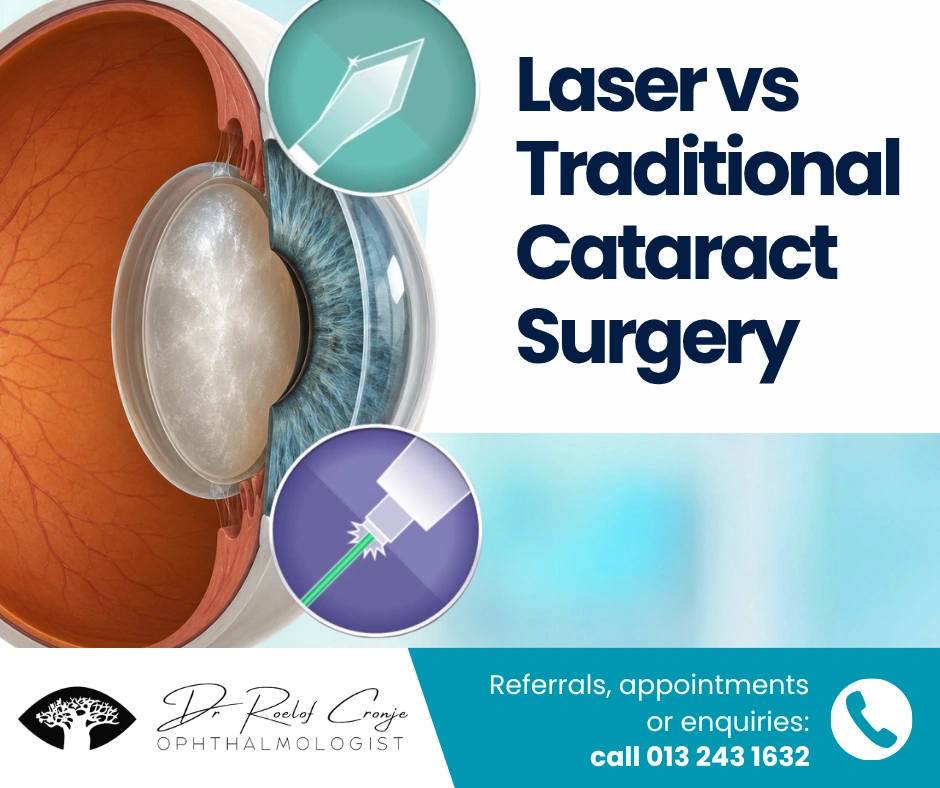
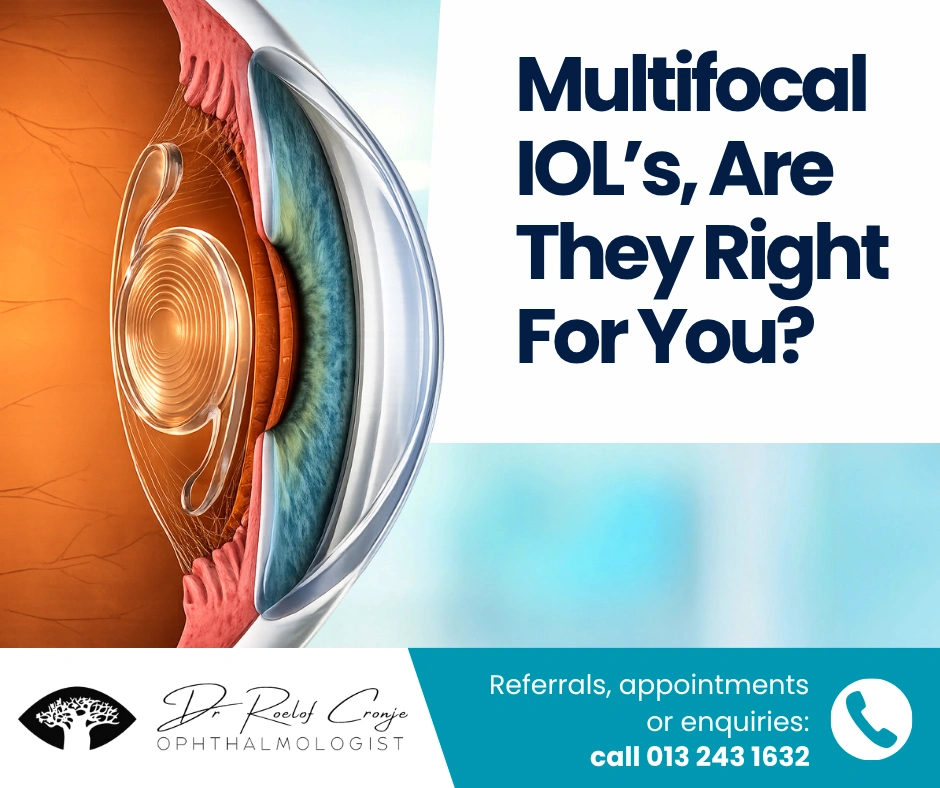
The natural lens of the eye plays a critical role in vision by focusing light precisely onto the retina. It is normally clear and flexible, allowing the eye to adjust focus between near and distant objects.
Any change in the clarity, shape, or flexibility of the lens can interfere with how light is transmitted, resulting in reduced visual quality. These changes often develop gradually and may not be immediately noticeable in their early stages.
Cataracts and lens conditions represent a group of disorders that affect the structure, clarity, and optical function of the eye’s natural lens. The lens is responsible for transmitting and focusing light onto the retina, and even subtle changes in its composition or flexibility can significantly impact visual quality.
These conditions may involve progressive clouding of the lens, reduced elasticity affecting the ability to focus, or structural alterations that change how light is refracted within the eye. While many lens-related changes are associated with ageing, they may also develop earlier due to systemic diseases such as diabetes, ocular trauma, environmental factors, or underlying eye conditions.
In many cases, lens changes occur gradually and without obvious early symptoms. Patients may initially notice mild blurring, increased glare, or difficulty with near or distance vision, often attributing these changes to normal ageing. However, without proper evaluation, these conditions can progress and lead to increasing visual impairment.
Related FAQ's
Call Us At:
013 243 1632 or 086 166 4664
Email Us At:
office@drcronje.com
Mon - Fri: 8:00 AM - 5:00 PM
Sat: By Appointment Only