
Retina and Macular Diseases
Home | Eye Conditions | Retina and Macular Diseases
Understanding the Retina
The retina is the light-sensitive layer at the back of the eye that converts light into signals sent to the brain. It relies on a stable blood supply and intact structure to function properly, and even small changes can affect visual clarity and overall vision.
Understanding the Macula
The macula is the central part of the retina responsible for sharp, detailed vision needed for tasks like reading and recognising faces. Because of its specialised role, even minor changes can significantly impact central visual clarity.
Overview of Retina and Macular Diseases
Retina and macular diseases are conditions that affect the back of the eye, where visual information is processed. The retina captures light and sends signals to the brain, while the macula — located at the centre of the retina — is responsible for sharp, detailed vision needed for reading, driving, and recognising faces.
When these areas are affected, vision can become blurred, distorted, or less clear. Straight lines may appear wavy, colours may seem less vivid, or dark or missing areas may develop in the centre of vision. While peripheral (side) vision may remain normal in some cases, central vision is often most affected when the macula is involved.
These conditions can develop for a variety of reasons, including age-related changes, reduced blood supply, fluid build-up, or other structural changes within the retina. General health conditions such as diabetes and high blood pressure can also increase the risk of retinal disease. Some conditions progress slowly over time, while others may develop more rapidly and require urgent assessment.
In many cases, early stages do not cause noticeable symptoms, which means changes can occur without immediate awareness. As the condition progresses, vision may gradually worsen and begin to interfere with daily activities.
Regular eye examinations are essential for detecting retinal and macular changes early. Timely diagnosis allows for appropriate monitoring or treatment, helping to slow progression, manage symptoms, and preserve long-term vision.
Retina and Macular Diseases Articles for Patients
Age-Related Vision Changes: What’s Normal and What’s Not?
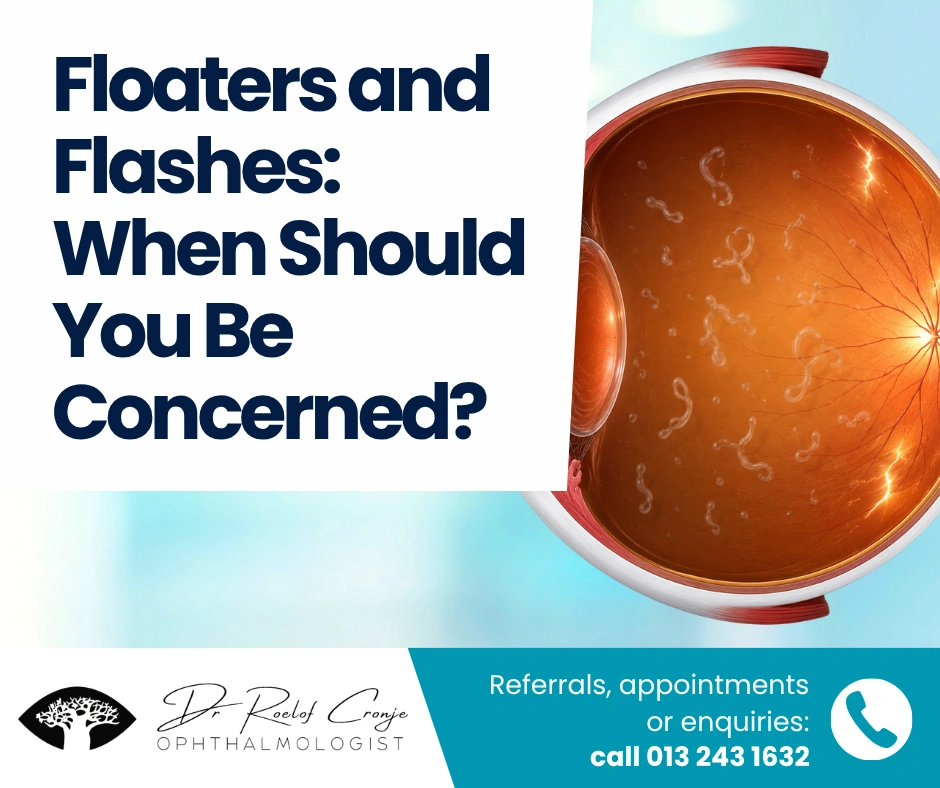
Floaters and Flashes: When Should You Be Concerned?

Retinal Detachment Surgery: 10 patient questions answered honestly
Related FAQ's