
Retinal Detachment
Home | Eye Conditions | Retina and Macular Diseases | Retinal Detachment
Additional Retinal Detachment Resources
Retinal Detachment resources for Patients
Clear, practical guidance to help you prepare for consultations, understand treatment options, and feel confident in your decisions.
Retinal Detachment resources for Healthcare Professionals
Information for optometrists and referring doctors, including referral considerations and collaborative care.
How to use this Retinal Detachment guide
This page provides an overview of retinal detachment and links to more detailed information on each aspect of the condition.
You can use this guide to:
- Understand what retinal detachment is and how it affects vision
- Recognise symptoms that may require urgent attention
- Learn about causes, risk factors and different types
- Explore how the condition is diagnosed and managed
If you experience sudden changes in your vision or are concerned about your eye health, use this guide to identify relevant information and seek timely assessment.
Retinal Detachment Overview
Retinal detachment is a serious eye condition in which the retina, the light-sensitive layer at the back of the eye, separates from the underlying tissue that supports and nourishes it. This separation disrupts the normal function of the retina and interferes with how visual information is processed and transmitted to the brain.
The condition often develops when fluid enters beneath the retina through a break or when traction pulls the retina away from its underlying layer. As the separation progresses, the affected area of the retina can no longer function normally, leading to changes in vision.
Retinal detachment can present suddenly or progress over a short period. Visual changes may begin in the peripheral field and can include shadows, areas of missing vision or reduced clarity. If the central part of the retina becomes involved, more significant visual impairment can occur.
Because retinal function depends on its attachment to underlying structures, prolonged detachment increases the risk of permanent visual loss. For this reason, retinal detachment is considered an urgent condition that requires prompt assessment.
Early recognition of symptoms and timely evaluation are essential in preserving vision. Understanding how retinal detachment develops and affects the eye provides an important foundation for identifying changes early and seeking appropriate care.
Retinal Detachment Articles for Patients
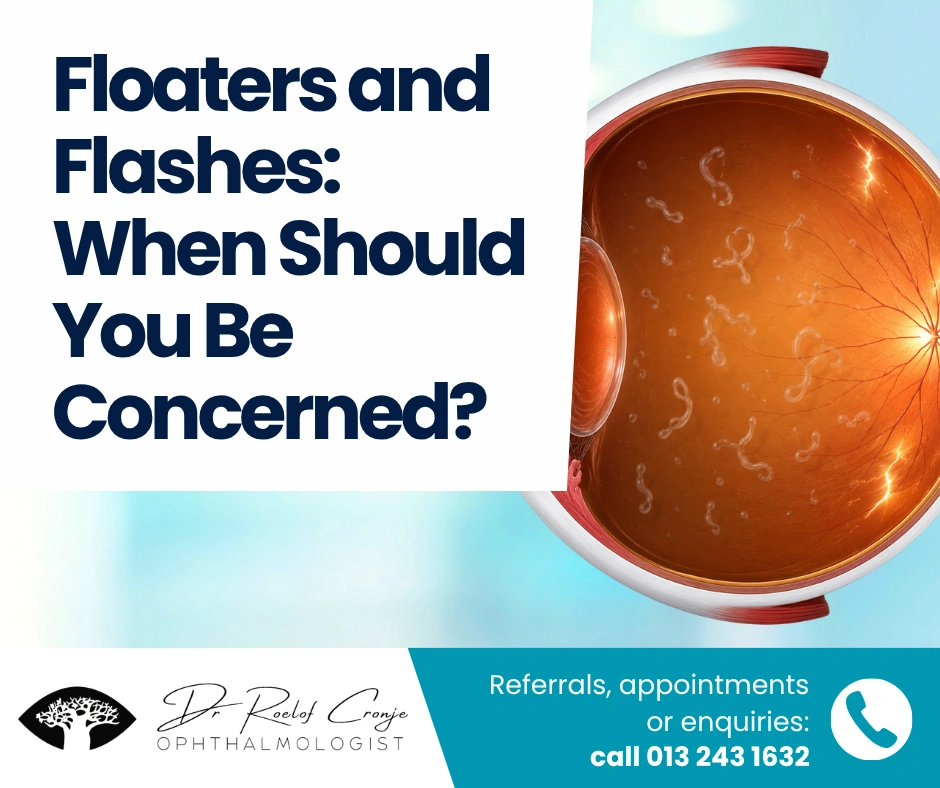
Floaters and Flashes: When Should You Be Concerned?

Retinal Detachment Surgery: 10 patient questions answered honestly

5 Retinal Conditions You Should Know About After 40
Related FAQ's
When to seek assessment
Urgent assessment is required if you experience sudden changes in your vision, including flashes of light, a sudden increase in floaters, a shadow or curtain over part of your vision, or a rapid decrease in visual clarity. These symptoms may indicate retinal changes that need immediate attention.
Even if symptoms seem mild or temporary, prompt evaluation is important, as retinal detachment can progress quickly and affect vision permanently if left untreated.
If you notice any sudden changes in your vision, seek immediate evaluation with Dr Cronjé Ophthalmologist & Eye Surgeon | FC Ophth (SA) | MBChB (Pret) | Dip Ophth (SA) for urgent assessment and expert care.