
Cornea and External Eye Disease
Home | Eye Conditions | Cornea and External Eye Disease
Understanding the Cornea and External Eye
The cornea is the clear, curved front surface of the eye that plays a key role in focusing light. Along with the surrounding external structures — including the eyelids, conjunctiva, and tear film — it helps protect the eye and maintain clear vision.
Because these structures are directly exposed to the environment, they are more susceptible to irritation, infection, and injury. Even minor changes can affect comfort, clarity, and overall eye health.
Overview of Cornea and External Eye Disease
Corneal and external eye diseases represent a group of conditions that affect the front surface of the eye and its protective structures. These may include inflammation, infection, structural changes, or disruptions to the tear film that maintains a healthy ocular surface.
Because the cornea is responsible for a significant portion of the eye’s focusing power, even small changes in its shape or clarity can have a noticeable impact on vision. External eye conditions may also affect the stability of the tear film, leading to dryness, irritation, or fluctuating vision.
These conditions can develop for a variety of reasons, including environmental exposure, underlying health conditions, infection, or mechanical irritation. Some may present suddenly with discomfort, while others develop gradually and primarily affect visual quality.
Early assessment is important to identify the cause, manage symptoms effectively, and prevent progression that could affect long-term vision or ocular surface health.
Cornea and External Eye Disease Articles for Patients
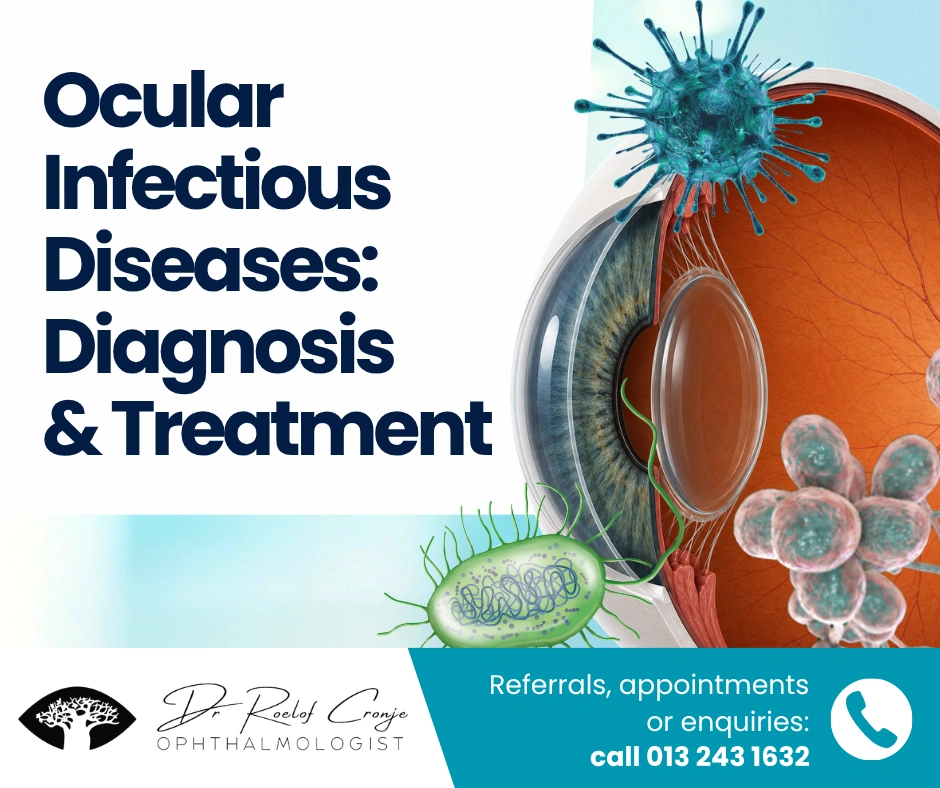
Ocular Infectious Diseases: Prevention, Diagnosis, and Treatment
Related FAQ's