
Age-Related Macular Degeneration (AMD)
Home | Eye Conditions | Retina and Macular Diseases | Age-Related Macular Degeneration (AMD)
Additional AMD Resources
AMD resources for Patients
Clear, practical guidance to help you prepare for consultations, understand treatment options, and feel confident in your decisions.
AMD resources for Healthcare Professionals
Information for optometrists and referring doctors, including referral considerations and collaborative care.
How to use this AMD guide
This page provides a structured overview of age-related macular degeneration and links to more detailed information on each aspect of the condition.
You can use this guide to:
- Understand how AMD affects the retina and central vision
- Recognise early changes that may require assessment
- Explore the different types and how they vary
- Learn how the condition is monitored and managed over time
If you have been diagnosed with AMD or are concerned about changes in your vision, you can navigate to the sections most relevant to your situation for more detailed guidance.
AMD Overview
Age-related macular degeneration (AMD) is a condition that affects the macula, the central part of the retina responsible for sharp, detailed vision. This area enables tasks such as reading, recognising faces and focusing on fine detail. When the macula is affected, central vision becomes impaired while peripheral vision is usually preserved.
AMD develops due to changes within the retinal layers that may occur gradually over time or, in some cases, progress more rapidly. Early stages often do not cause noticeable symptoms, which means changes can go undetected until vision is affected.
The impact varies depending on the form and stage of the condition. Individuals may experience blurred or distorted central vision and increasing difficulty with tasks that require visual precision.
Although AMD does not typically cause complete blindness, it can significantly affect daily functioning. Early detection and ongoing monitoring play an important role in maintaining visual function and supporting long-term eye health.
AMD Articles for Patients
Age-Related Vision Changes: What’s Normal and What’s Not?

5 Retinal Conditions You Should Know About After 40
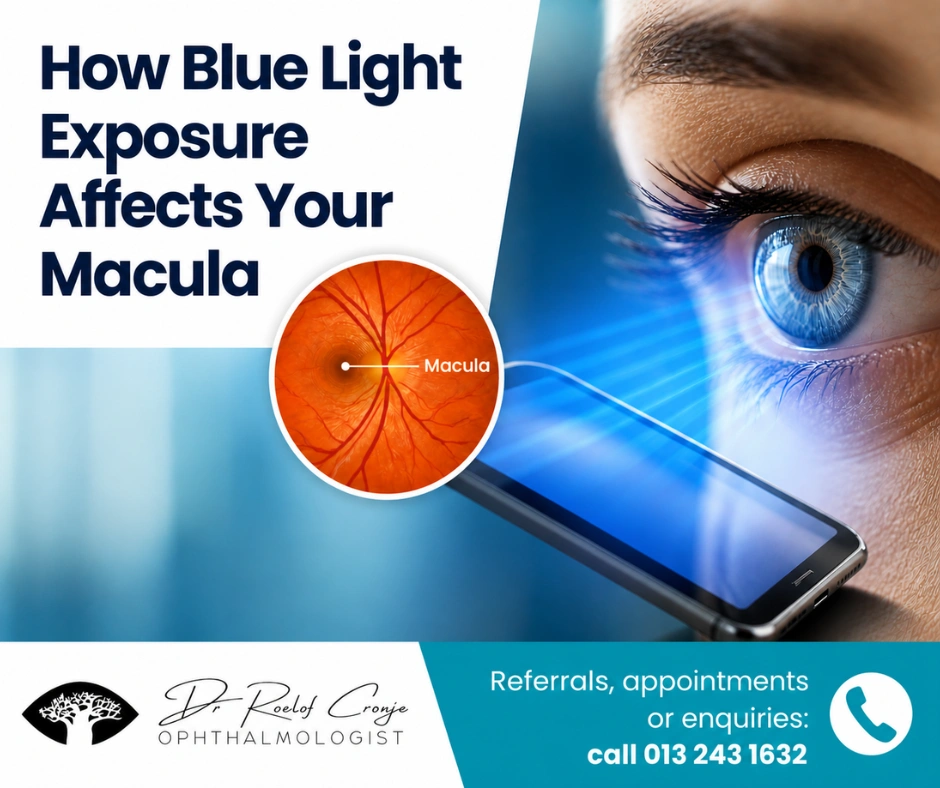
How Blue Light Exposure Affects Your Macula
Related FAQ's
When to seek assessment
An eye assessment is recommended if you notice changes in your central vision, such as blurring, distortion or difficulty focusing on fine detail.
You should also seek evaluation if tasks like reading or recognising faces become more challenging. Even in the absence of symptoms, regular eye examinations are important, particularly as early changes may not be noticeable.
If you are experiencing changes in your central vision or would like a comprehensive retinal assessment, schedule a consultation with Dr Cronjé Ophthalmologist & Eye Surgeon | FC Ophth (SA) | MBChB (Pret) | Dip Ophth (SA) for personalised evaluation and ongoing care.