
cases, the overall risks of traditional and laser-assisted cataract surgery are the same. Both procedures involve removing the eye’s cloudy natural lens and replacing it with a clear artificial intraocular lens (IOL). Whether the surgery is performed manually or with the assistance of a femtosecond laser, the goal — and the general surgical risk profile — remains consistent.
Patients undergoing either type of surgery face the same key risks, including inflammation, infection, swelling of the retina (macular edema), posterior capsular opacification (a common long-term side effect), elevated intraocular pressure, and in rare cases, retinal detachment. These complications are uncommon, especially when the procedure is performed by an experienced surgeon and followed by proper aftercare.
How Do the Procedures Differ?
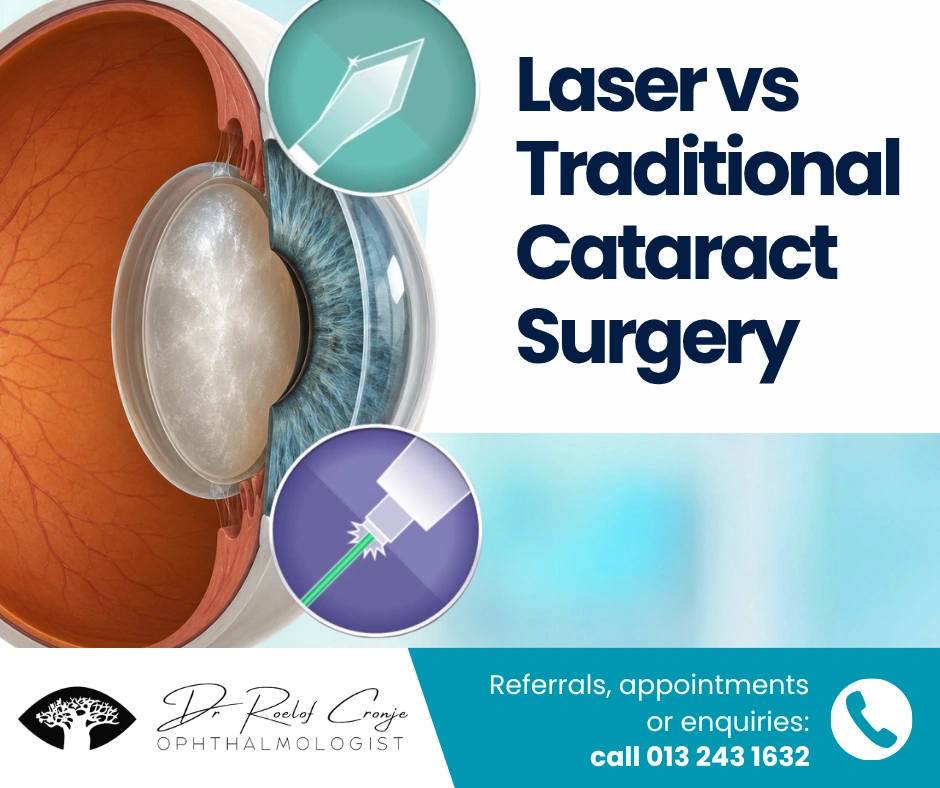
While the risks are largely the same, the techniques differ. In traditional cataract surgery, the surgeon uses handheld instruments to make the incision, open the lens capsule, and remove the cataract with ultrasound energy. In laser-assisted surgery, a computer-guided laser performs some of these steps, such as creating the incision and softening the lens before removal.
Some suggest that laser-assisted surgery may offer slightly more precision in certain parts of the procedure. However, this does not necessarily reduce the overall complication rate. In fact, several large clinical studies have found no significant difference in long-term outcomes or safety between laser-assisted and traditional surgery, especially for patients with uncomplicated cataracts.
Does One Pose More Risk Than the Other?
Not necessarily — but laser-assisted surgery introduces additional equipment and surgical steps, such as aligning the patient with the laser platform and conducting detailed imaging before the procedure can begin. This may lengthen surgical time and increase procedural complexity, though not to a degree that changes the standard risk profile. In some cases, this added complexity may not offer a clear benefit.
From a safety and outcomes perspective, both approaches are considered effective and low-risk. The key variable is the surgeon’s experience and the individual health of the patient’s eye — not necessarily the presence of a laser.
Final Word
While the tools may differ, the overall risks of cataract surgery remain the same whether performed traditionally or with laser assistance.
At Dr. Cronje’s practice, only traditional cataract surgery is performed — a method backed by decades of clinical success, known for its reliability, efficiency, and excellent safety profile.