High cholesterol vision effects can often be detected through changes in the retinal blood vessels before systemic symptoms become apparent. Elevated lipid levels may contribute to vascular complications within the eye, including retinal artery and vein occlusions, as well as microvascular abnormalities.
For clinicians, recognising these patterns is essential in identifying patients at increased cardiovascular risk and facilitating timely referral and management.
From Arteries to Eyes: How Cholesterol Reaches the Ocular Tissues
Cholesterol and other lipids circulate throughout the body — including in the tiny vessels that feed the eye. When lipid levels remain high for years, two things often happen:
- Lipid deposition in tissues — including the cornea and ocular structures.
- Accelerated vascular disease — atherosclerosis, clot risk, vessel narrowing — which can compromise blood flow to the retina.
In other words: a lipid disorder doesn’t just threaten the heart or carotids. It can slowly erode ocular health too — often silently.
Studies linking disorders of lipid metabolism with ocular disease find associations ranging from corneal changes to retinal vascular complications. PMC+2Semantic Scholar+2
Because of this, many eye-related changes in people with high cholesterol are not just cosmetic — they reflect deeper systemic risk.
The Classic Sign: Corneal Arcus (Arcus Senilis / Arcus Cornealis)
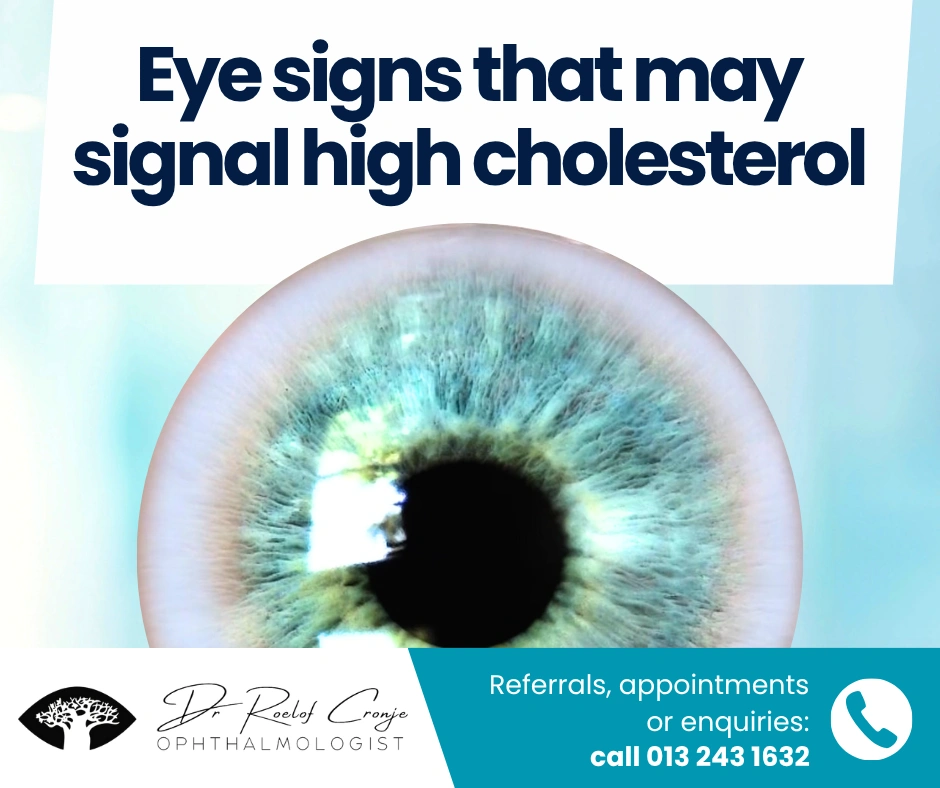
One of the most visible signs that cholesterol may be affecting the eye is corneal arcus — a pale white or greyish ring around the periphery of the cornea. Ophthalmology literature calls this arcus senilis (or, in younger people, arcus juvenilis). Wikipedia+1
Why it appears
The ring is caused by lipid deposits in the corneal stroma, reflecting long-term exposure to elevated lipids. Wikipedia+1
When it’s just “age + cholesterol” vs a red flag
- In older adults (> ~60), arcus is common and often considered “benign” if isolated. Wikipedia+1
- But when you see arcus in a younger adult (especially under 50), it can signal familial hyperlipidaemia or longstanding dyslipidaemia — and should prompt a full lipid panel, cardiovascular risk evaluation and possible further investigation. Ophthalmology Times+1
Why it matters
Because the lipids deposited in the cornea reflect chronic exposure, arcus can serve as a visible warning sign. It may not affect vision directly, but it indicates the body’s vessels — including those for the heart, brain and eye — have been bathed in high lipid levels for years.
That makes it a useful cue to act early on cardiovascular and ocular risk factors — before something more serious occurs.
More Serious Eyes: When Lipids Threaten Retina and Circulation
Beyond cosmetic signs, high cholesterol and dyslipidaemia can contribute to more serious vascular events in the retina.
Retinal Vein & Artery Occlusions
The retina depends on tiny, delicate vessels. If those vessels are compromised — by atherosclerosis, plaque, fat emboli or clotting — vision can be lost almost instantly.
- Studies show that people with dyslipidaemia (especially high LDL, high triglycerides, or altered lipoproteins) have increased rates of retinal vein occlusion (RVO) and retinal artery occlusion (RAO). PMC+2PubMed+2
- A common mechanism is that cholesterol-rich plaques or emboli from larger arteries (e.g. carotid) travel to retinal vessels and lodge there — blocking blood flow. This can cause sudden, severe, painless vision loss. American Society of Retina Specialists+2Hopkins Medicine+2
- When such occlusions occur, they are often a harbinger of systemic vascular disease — stroke risk, cardiovascular disease, or carotid disease. Hopkins Medicine+2American Society of Retina Specialists+2
Even when retinal occlusion isn’t total, partial blockages or chronic lipid-induced vascular changes can impair circulation long-term — increasing risk of macular edema, retinal ischemia, or optic nerve damage, especially in combination with hypertension or diabetes. PMC+2MDPI+2
Other Lipid-Related Ocular Findings
In some lipid disorders — especially when triglycerides or lipoprotein abnormalities are present — more unusual findings may appear:
- Lipemia retinalis: a rare but striking condition where retinal vessels appear milky or salmon-coloured due to very high triglycerides or chylomicrons. While uncommon, it is a vivid sign of severe lipid derangement. Wikipedia+2ResearchGate+2
- Xanthelasma (cholesterol deposits in eyelid skin), and sometimes lipid deposits near ocular tissues — while not always vision-threatening — are often markers of systemic lipid disorders. Semantic Scholar+1
These findings offer extra clues that the body’s lipid metabolism is significantly disturbed — and that organs beyond the heart may be at risk.
When Eye Findings Prompt Systemic Action: What GPs Should Do
For a GP — or any clinician caring for adults over 40 — certain eye findings should trigger a systemic work-up and risk-factor modification. These include:
- Corneal arcus in younger patients (especially under 50)
- Sudden retinal vein or artery occlusion or unexplained visual loss
- Xanthelasma with no other cause
- Lipemia retinalis or unusual fundus vessel appearance
Recommended next steps
- Full lipid panel (LDL-C, HDL-C, triglycerides, lipoprotein(a) if available)
- Cardiovascular risk assessment (BP, glucose, smoking, family history)
- Lifestyle counselling (diet, exercise, smoking cessation)
- Consider early initiation of lipid-lowering therapy (e.g. statins), especially if risk is high or other risk factors present
- Referral to ophthalmologist / retina specialist if there is evidence of occlusion or vascular compromise — even if vision is preserved
Evidence supports that lipid-lowering therapy reduces risk of further vascular events, including some ocular complications like retinal vein occlusion. PMC+1
Coordinated care — between the GP, the ophthalmologist, and possibly a cardiologist — is often the most effective way to manage ocular and systemic risk simultaneously.
How to Talk to Patients: Making It Real
Many patients think of cholesterol as a “heart problem.” It helps to explain:
“Your eyes are like windows into your blood vessels. If cholesterol builds up and travels everywhere, the eyes often show signs early — even before the heart or brain has a problem.”
That framing helps make cholesterol control feel more urgent, and more relevant to daily vision and long-term health.
Encourage them to think about cholesterol management not just for heart health — but also for preserving vision, preventing silent vascular damage, and reducing long-term risk of retinal strokes or artery blockages.
Wrapping Up: Eyes as Early Warning Systems
High cholesterol doesn’t only threaten arteries in the heart or brain. It can leave quiet but visible fingerprints in the eyes — from corneal arcus and xanthelasma to lipid-related retinal damage or occlusion.
For adults over 40, a simple eye exam — by an optometrist or ophthalmologist — can uncover systemic risk long before symptoms appear. For GPs, these ocular clues offer a powerful trigger to investigate, treat, and prevent more serious vascular disease.
By combining lipid control, cardiovascular risk management, and regular eye care, we can help protect not just arteries — but sight itself.