


Cataracts are one of the most common eye conditions that affect people as they age. They can cause a range of symptoms that can significantly impact a patient’s daily life. In this blog post, we will discuss the different types of cataracts, how they form, and the symptoms that patients may experience. If you are experiencing any of the symptoms discussed, we encourage you to contact an ophthalmologist for a thorough eye examination.
What are cataracts?
Before diving into the different types of cataracts, it’s essential to understand what they are. Cataracts are a clouding of the eye’s natural lens, which sits behind the iris and pupil. As the lens becomes clouded, it can interfere with the passage of light to the retina, causing vision problems.
Types of cataracts:
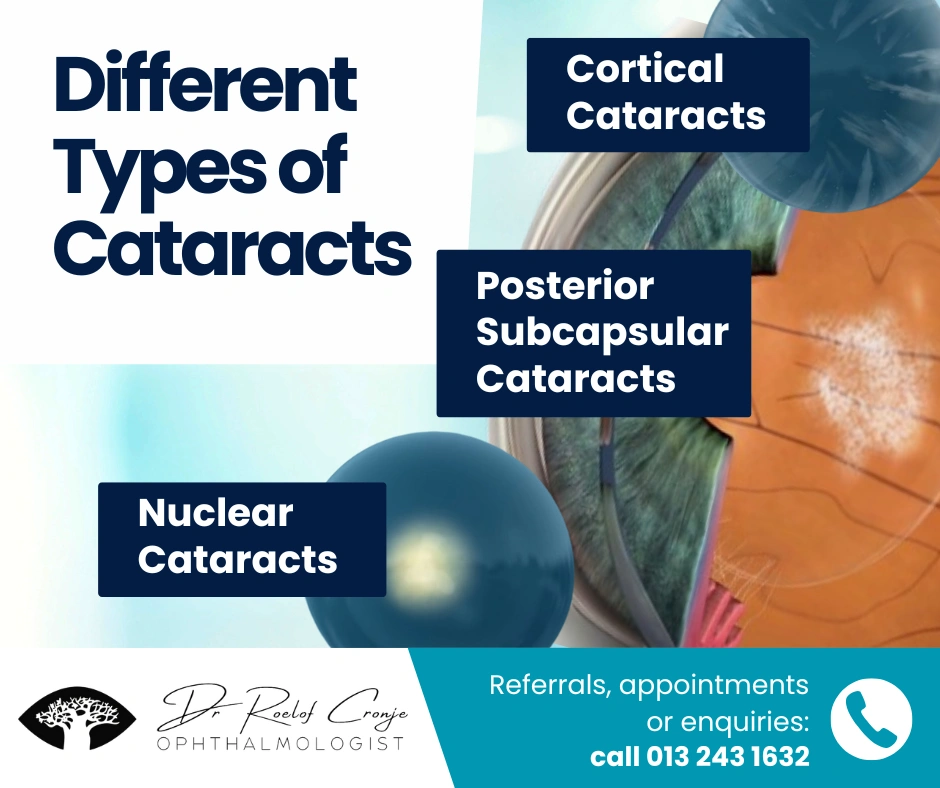
There are three main types of cataracts: nuclear, cortical, and posterior subcapsular cataracts.
Nuclear cataracts:
Nuclear cataracts form in the center, or nucleus, of the eye’s natural lens. This type of cataract is often associated with aging and can cause the lens to become yellow or brown. As the cataract progresses, the lens may also become more opaque, making it difficult to see clearly.
Symptoms of nuclear cataracts:
- Blurred vision
- Difficulty seeing in low light conditions
- Sensitivity to glare
Cortical cataracts:
Cortical cataracts form in the lens cortex, which surrounds the eye’s nucleus. This type of cataract is characterized by wedge-shaped opacities that extend from the outside of the lens to the center. As the cataract progresses, the opacities may grow larger and more numerous, causing vision problems.
Symptoms of cortical cataracts
- Blurred vision
- Difficulty seeing in bright light conditions
- Halos around lights
Posterior subcapsular cataracts:
Posterior subcapsular cataracts form at the back of the lens, just beneath the lens capsule. This type of cataract is often associated with diabetes and other medical conditions, as well as prolonged use of steroid medications. As the cataract progresses, it can cause significant vision problems.
Symptoms of posterior subcapsular cataracts
- Blurred vision
- Difficulty reading
- Halos around lights
What to do if you are experiencing cataract symptoms
If you are experiencing any of the symptoms discussed in this post, we encourage you to contact an ophthalmologist for a comprehensive eye examination. An ophthalmologist can perform a thorough evaluation of your eyes and help determine if cataracts are the cause of your symptoms. If cataracts are detected, they can discuss the available treatment options, which may include surgery or non-surgical approaches.
Conclusion
Cataracts are a common eye condition that can cause a range of symptoms that can impact a patient’s daily life. By understanding the different types of cataracts and their symptoms, patients can take steps to protect their eye health and seek treatment if necessary. If you are experiencing any symptoms related to cataracts, don’t hesitate to contact an ophthalmologist to schedule a comprehensive eye exam.