

In today’s digital age, our eyes are exposed to more screens than ever before—phones, computers, tablets, and TVs dominate our daily routines. One of the key concerns that has emerged is the impact of blue light on eye health, particularly on the macula, a vital part of the retina responsible for sharp central vision. In this article, we’ll explore how blue light affects your macula, its potential risks, and how you can protect your vision.
What Is Blue Light?
Blue light is a high-energy, short-wavelength light that is naturally emitted by the sun. However, artificial sources such as LED screens, fluorescent lighting, and digital devices also produce significant amounts of blue light. While blue light exposure during the day can help regulate our sleep-wake cycle, prolonged exposure—especially at night—has raised concerns about its effects on eye health.
Understanding the Macula’s Role in Vision
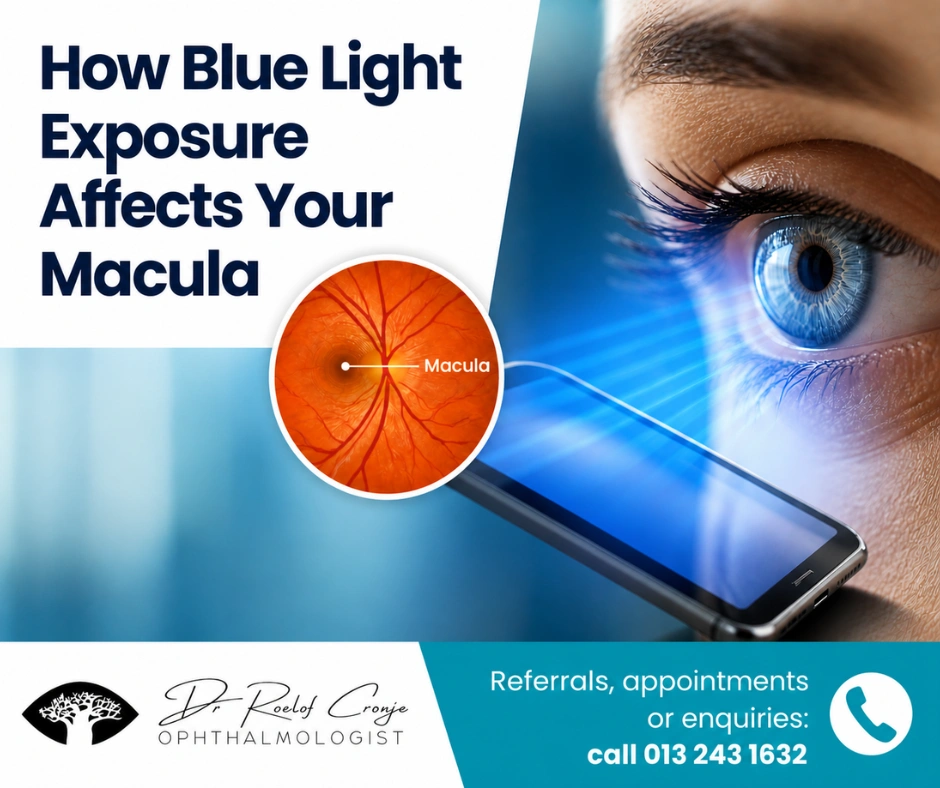
The macula is a small but crucial part of the retina located at the back of the eye. It is responsible for detailed central vision, which allows us to perform tasks like reading, driving, and recognizing faces. Because of its high concentration of photoreceptor cells, the macula is particularly vulnerable to damage from light exposure, including blue light.
How Blue Light Affects the Macula
- Oxidative Stress
Blue light penetrates deep into the eye, reaching the macula. Its high energy can generate oxidative stress, which damages the photoreceptor cells in the macula over time. This can increase the risk of conditions like macular degeneration. - Disruption of Protective Pigments
The macula contains pigments such as lutein and zeaxanthin that act as natural filters, shielding it from harmful light. Prolonged blue light exposure can deplete these pigments, reducing their protective ability and leaving the macula more vulnerable to damage. - Potential Acceleration of Age-Related Macular Degeneration (AMD)
Studies suggest that prolonged blue light exposure may contribute to the development or worsening of age-related macular degeneration, a leading cause of vision loss in older adults. While more research is needed, this potential link underscores the importance of preventative measures.
Symptoms of Blue Light Strain
If you spend long hours in front of screens, you may experience symptoms such as:
- Eye fatigue and discomfort
- Blurred vision
- Dry eyes
- Difficulty focusing
- Headaches, particularly after prolonged device use
While these symptoms are often temporary, chronic exposure without protective measures may lead to more significant long-term issues.
Protecting Your Macula from Blue Light
Fortunately, there are several steps you can take to minimize the impact of blue light on your macula and overall eye health:
- Use Blue Light-Blocking Glasses
These specially designed glasses filter out harmful blue light, reducing the strain on your eyes during screen use. - Apply the 20-20-20 Rule
Every 20 minutes, take a 20-second break and look at something 20 feet away. This practice helps reduce eye strain from prolonged screen time. - Adjust Your Screen Settings
Many devices have a “night mode” or blue light filter setting that reduces the intensity of blue light emitted, particularly during evening hours. - Increase Lutein and Zeaxanthin Intake
Consuming leafy greens like spinach, kale, and other lutein- and zeaxanthin-rich foods can strengthen the macula’s natural defenses. - Limit Screen Time
Where possible, take regular breaks from digital devices, especially before bedtime. This will not only help your eyes but also improve your sleep quality. - Wear UV-Blocking Sunglasses
Although primarily aimed at outdoor light, sunglasses that block UV and blue light can offer additional protection.
When to Seek Professional Help
If you experience persistent symptoms of eye strain, blurry vision, or discomfort, it’s essential to consult an eye care professional. Regular comprehensive eye exams can detect early signs of macular damage and other vision problems.
Conclusion
While blue light is an inevitable part of modern life, taking steps to protect your macula can help safeguard your vision for years to come. Simple changes like wearing blue light-blocking glasses, following the 20-20-20 rule, and eating a diet rich in protective nutrients can make a significant difference. By prioritizing eye health today, you can reduce the risk of long-term damage and continue enjoying clear, vibrant vision.