
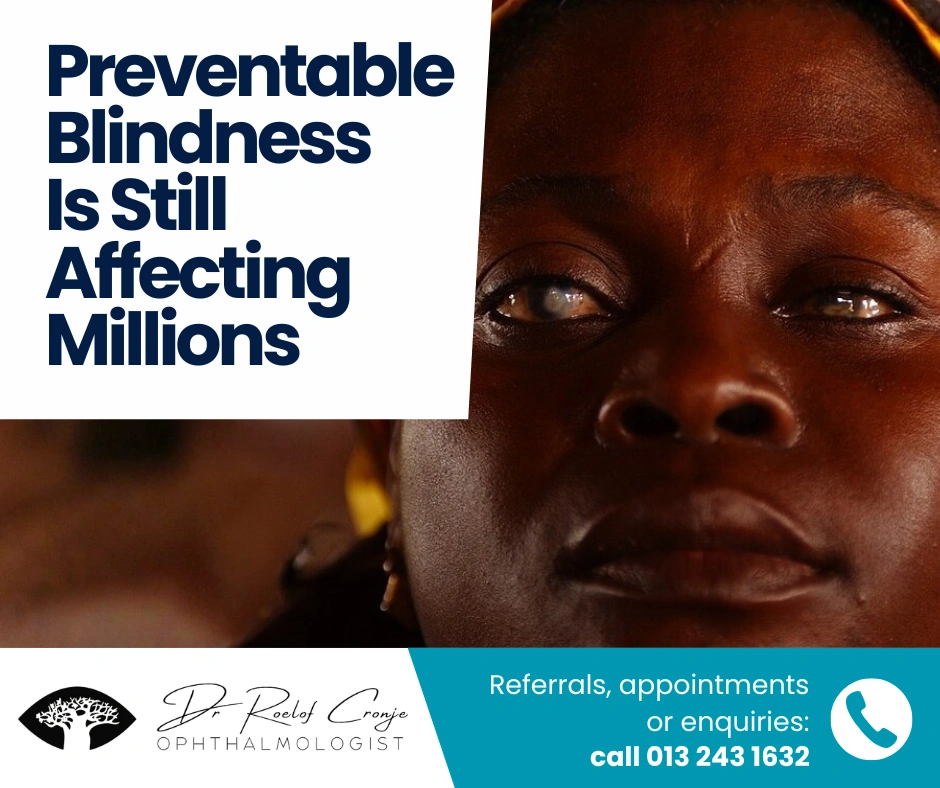
Cataracts in the third world have become one of the leading causes of preventable blindness, affecting millions of people across developing nations. Limited access to healthcare, poverty, shortages of surgical services, and delayed diagnosis continue to turn a highly treatable condition into a growing public health and socioeconomic crisis.
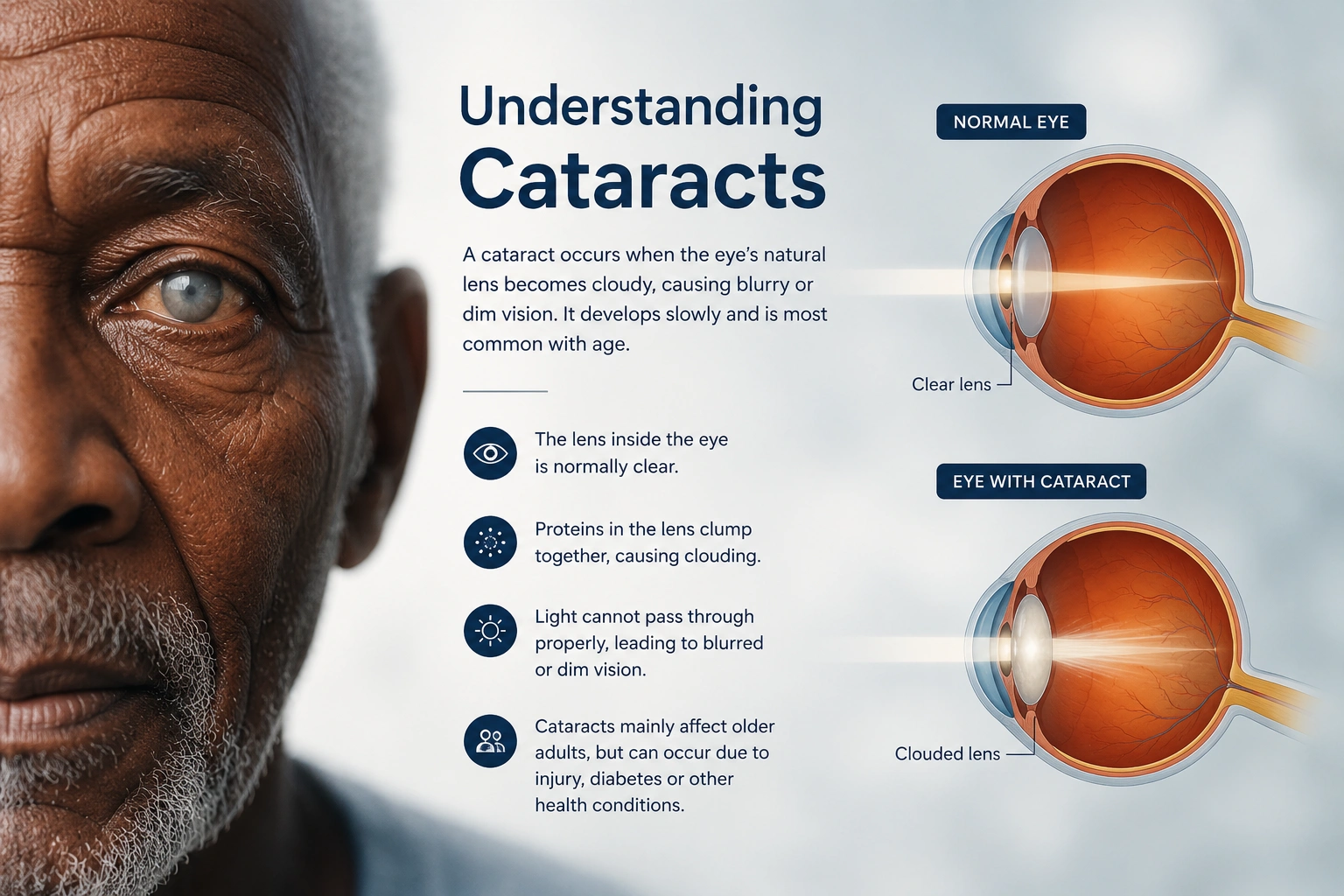
Understanding cataracts
A cataract occurs when the natural lens inside the eye becomes cloudy. As the lens loses clarity, vision gradually worsens. Patients may experience:
- Blurred or hazy vision
- Increased glare sensitivity
- Difficulty seeing at night
- Faded colours
- Reduced contrast sensitivity
- Frequent changes in spectacle prescriptions
Over time, cataracts can progress to severe visual impairment or complete blindness.
Although cataracts are strongly associated with ageing, they can also develop earlier due to:
- Diabetes
- Eye trauma
- Steroid use
- Malnutrition
- Ultraviolet light exposure
- Smoking
- Genetic conditions
- Previous eye inflammation or infection
In developed healthcare systems, cataracts are routinely treated before severe vision loss occurs. In much of the developing world, however, access to surgery remains critically limited.
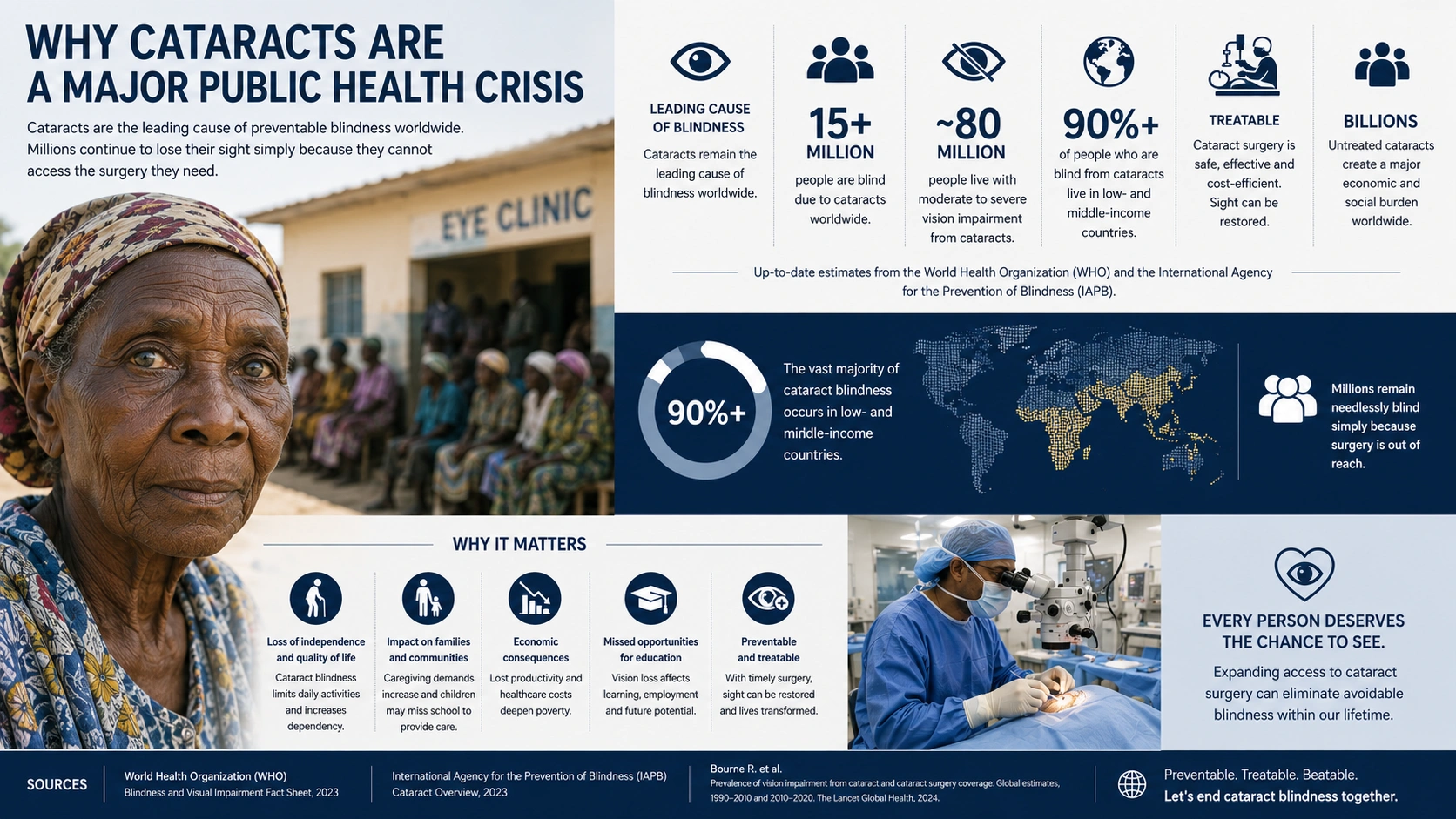
Why cataracts are a major public health crisis
Globally, cataracts remain the leading cause of blindness.
In many third-world regions, the problem is not the absence of treatment — it is the absence of access. Cataract surgery may be available in major cities, yet inaccessible to rural populations due to:
- Poverty
- Distance from surgical centres
- Lack of transportation
- Limited healthcare infrastructure
- Shortages of ophthalmologists
- Poor public awareness
- Long surgical waiting lists
For many families, vision loss becomes a cycle of economic hardship. A blind individual may lose employment, require constant care, or become unable to contribute to household income. In agricultural communities, even mild vision loss can dramatically affect productivity and survival.
The consequences extend beyond healthcare:
- Increased poverty
- Reduced educational opportunities
- Greater dependency
- Social isolation
- Higher injury and fall risk
- Reduced national productivity
Cataracts therefore become not only a medical issue, but a socioeconomic crisis.
The disproportionate burden on rural populations
One of the greatest disparities exists between urban and rural healthcare access.
Patients in remote areas often:
- Have never undergone an eye examination
- Assume blindness is a normal part of ageing
- Lack transportation to surgical centres
- Cannot afford time away from work
- Fear surgery due to misinformation
- Present only when vision is severely impaired
In some regions, patients may remain blind for years despite having a treatable condition.
Women are particularly affected in many developing nations, where cultural, economic, and social barriers may limit access to healthcare. Elderly individuals living alone are similarly vulnerable.
Cataracts and the ageing population crisis
The global population is ageing rapidly.
As life expectancy increases across developing nations, the number of individuals affected by cataracts is expected to rise dramatically. Unfortunately, healthcare systems in many regions are already overwhelmed.
This creates a dangerous imbalance:
- More patients requiring surgery
- Too few trained surgeons
- Insufficient surgical facilities
- Limited funding
- Inadequate screening programmes
Without major intervention, preventable blindness rates may continue to escalate.
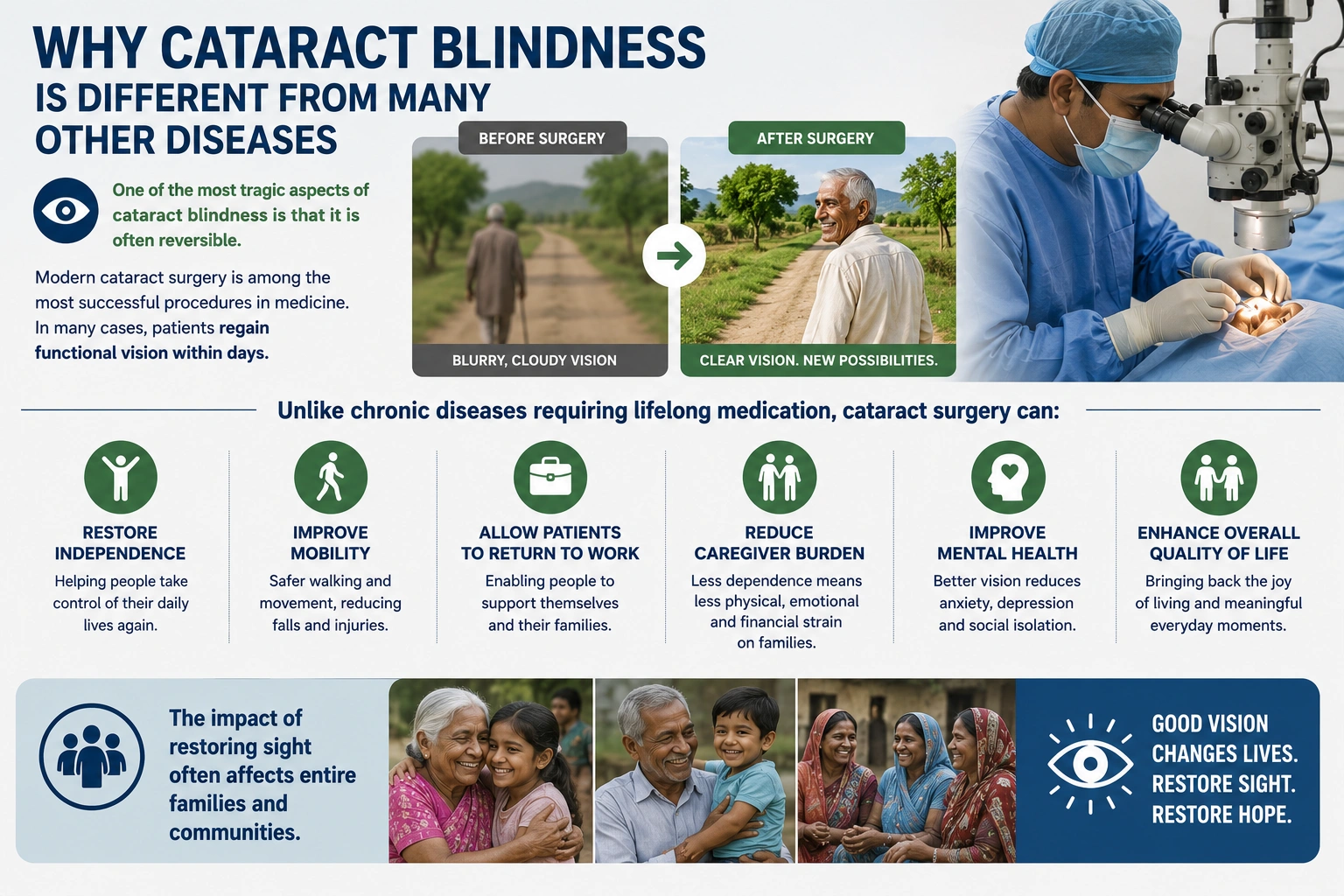
Why cataract blindness is different from many other diseases
One of the most tragic aspects of cataract blindness is that it is often reversible.
Modern cataract surgery is among the most successful procedures in medicine. In many cases, patients regain functional vision within days.
Unlike chronic diseases requiring lifelong medication, cataract surgery can:
- Restore independence
- Improve mobility
- Allow patients to return to work
- Reduce caregiver burden
- Improve mental health
- Enhance overall quality of life
The impact of restoring sight often affects entire families and communities.
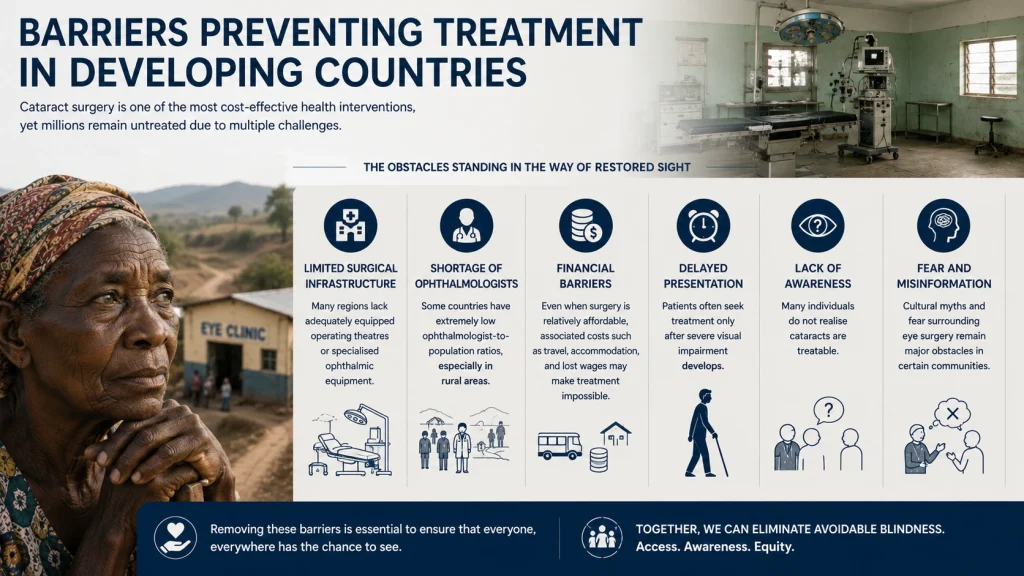
Barriers preventing treatment in developing countries
Limited surgical infrastructure
Many regions lack adequately equipped operating theatres or specialised ophthalmic equipment.
Shortage of ophthalmologists
Some countries have extremely low ophthalmologist-to-population ratios, especially in rural areas.
Financial barriers
Even when surgery is relatively affordable, associated costs such as travel, accommodation, and lost wages may make treatment impossible.
Delayed presentation
Patients often seek treatment only after severe visual impairment develops.
Lack of awareness
Many individuals do not realise cataracts are treatable.
Fear and misinformation
Cultural myths and fear surrounding eye surgery remain major obstacles in certain communities.
The economic impact of untreated cataracts
Blindness caused by cataracts creates substantial economic strain.
Vision impairment affects:
- Workforce participation
- Household income
- Productivity
- Healthcare expenditure
- Caregiver employment
- Community development
Studies consistently show that restoring sight through cataract surgery provides major economic benefits at both individual and national levels.
In many ways, cataract surgery is not simply healthcare — it is economic intervention.
The role of outreach programmes and surgical campaigns
Mobile eye clinics and outreach initiatives play a critical role in underserved regions.
Successful programmes often focus on:
- Community education
- Early screening
- Rural surgical camps
- Affordable surgery
- Training local healthcare workers
- Improving referral systems
Many non-profit organisations and international eye health initiatives have significantly reduced blindness rates in targeted communities. However, the scale of the problem remains enormous.
Technology and the future of cataract care in low-resource settings
Innovation may help close the treatment gap.
Emerging solutions include:
- Portable diagnostic equipment
- Teleophthalmology
- AI-assisted screening
- Low-cost surgical technologies
- Expanded training programmes
- High-volume surgical systems
Artificial intelligence may eventually help identify patients earlier, prioritise referrals, and improve screening efficiency in remote areas.
However, technology alone cannot solve the crisis without investment in healthcare infrastructure and workforce development.
Why awareness matters
One of the greatest challenges is that cataract blindness often progresses slowly.
Patients adapt gradually to worsening vision and may not realise how severely their sight has deteriorated. Public awareness campaigns are therefore essential to:
- Encourage early assessment
- Reduce fear surrounding surgery
- Promote screening
- Improve treatment acceptance
- Educate communities about preventable blindness
The earlier cataracts are identified, the better the visual outcomes are likely to be.
Cataracts should no longer cause preventable blindness
In many parts of the world, losing vision from cataracts is no longer medically inevitable — but socially and economically, it still happens every day.
The tragedy is not that cataracts exist. The tragedy is that millions remain blind despite effective treatment being available.
Addressing cataracts in the third world requires:
- Greater healthcare investment
- Improved surgical access
- Rural outreach programmes
- Public education
- Workforce expansion
- Sustainable eye care systems
Blindness from cataracts is one of the most solvable healthcare crises in the world. Yet until access improves globally, it will continue to function as a silent pandemic affecting millions.