If you’re preparing for cataract surgery, it’s natural to wonder how long it will take to recover. One of the most common questions patients ask is: Which type of cataract surgery offers the quickest recovery?
Although there are different surgical approaches available, traditional cataract surgery remains the gold standard — and in most cases, the recovery time is just as fast and predictable as more technologically complex alternatives.
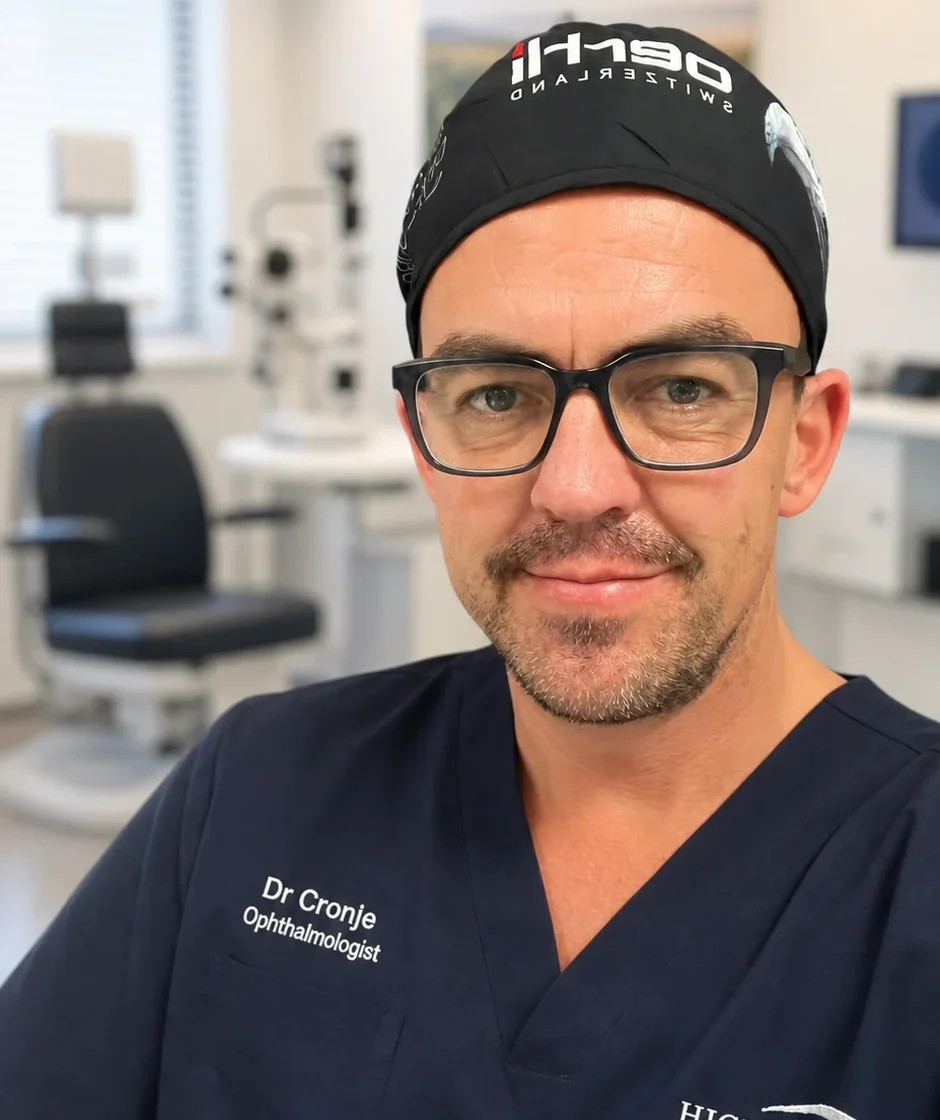
At Dr. Cronje’s practice, traditional cataract surgery is the technique used, with excellent results and recovery timelines that align with global standards.
Understanding Cataract Surgery and Healing
Cataracts develop when the eye’s natural lens becomes cloudy. Surgery involves removing that lens and replacing it with a clear artificial intraocular lens (IOL), restoring vision.
The procedure is typically performed under local anaesthetic. In many cases, medicine is also given to help you relax during the process. Most patients go home the same day and experience improvement in vision within 24 to 48 hours.
Recovery is usually straightforward:
- First 1–2 days: Noticeable improvement in clarity
- First week: Return to most normal daily activities
- 4–6 weeks: Full healing of the eye
You’ll be prescribed eye drops to prevent infection and support healing. You may also need to wear an eye shield while sleeping during the first few nights.
Recovery Time with Traditional Cataract Surgery
Traditional cataract surgery, also known as phacoemulsification, uses tiny incisions and ultrasound energy to remove the cataract. The surgeon replaces it with an artificial lens suited to your vision needs.
When performed by an experienced surgeon, this method offers:
- Fast visual recovery
- Minimal discomfort
- No stitches in most cases
- Low risk of complications
Most patients are back to reading, walking, and returning to light work within a few days. Vision continues to stabilize over the following weeks.
What About Laser-Assisted Surgery?
Laser-assisted cataract surgery is available in some practices and uses a laser to automate a few steps of the procedure. However, there is no strong evidence that it significantly speeds up recovery time compared to traditional techniques — especially in standard, uncomplicated cases.
Dr. Cronje does not offer laser-assisted cataract surgery, as traditional methods provide excellent outcomes for the vast majority of patients and are supported by decades of clinical success.
What Affects Cataract Surgery Recovery Time?
While the surgical technique matters, several other factors play an important role in healing:
- The health of your eye — conditions like dry eye or diabetic retinopathy may affect recovery
- The type of IOL implanted
- Your overall health and immune response
- Adherence to aftercare — including using prescribed eye drops and avoiding rubbing or pressure
- The complexity of the cataract — denser cataracts may require more ultrasound energy and healing time
Dr. Cronje assesses all of these factors during your consultation and plans your surgery accordingly.
Final Word: Traditional Surgery Offers Fast, Reliable Recovery
For most patients, traditional cataract surgery delivers a fast and smooth recovery — often within the same timeframe as more high-tech alternatives. When performed with care and precision, it remains one of the safest and most effective procedures in modern medicine.