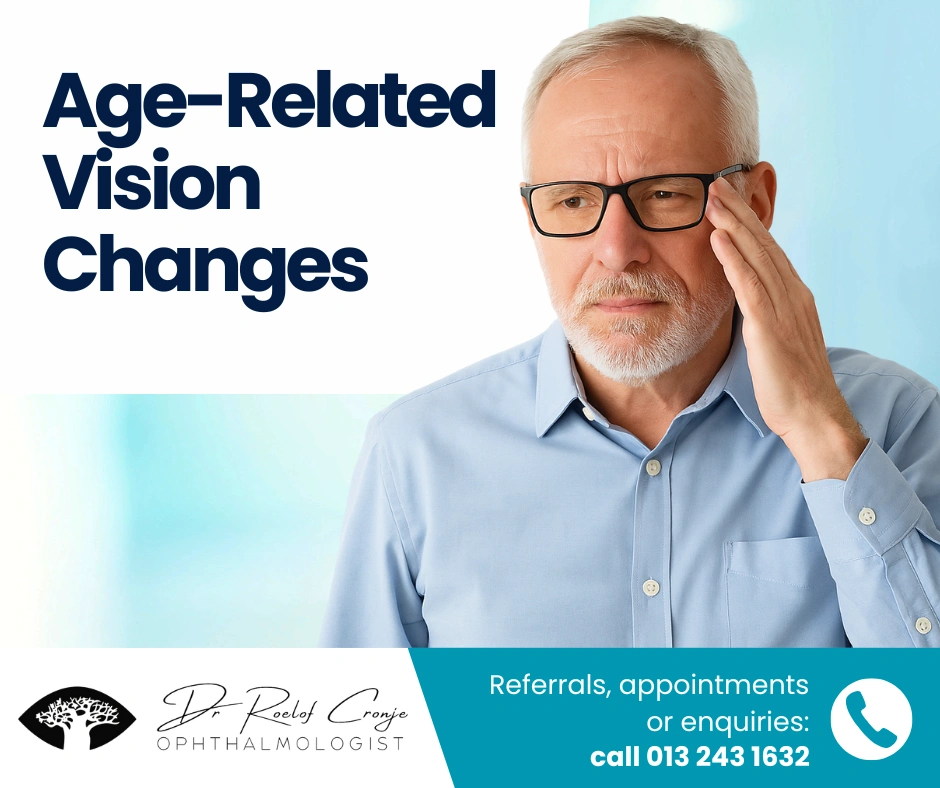
As we age, it’s natural to experience age related vision changes. While some of these changes are a normal part of the aging process, others may signal more serious eye health concerns. Understanding what’s typical versus what requires medical attention is crucial for maintaining long-term eye health.
Normal Age-Related Vision Changes
The following are common and generally not cause for alarm. They can often be managed with corrective lenses, lifestyle adjustments, or routine eye care:
1. Presbyopia
Presbyopia is the gradual loss of your eye’s ability to focus on nearby objects, typically beginning around age 40. It becomes noticeable when reading small print or working up close becomes difficult. Reading glasses, bifocals, multifocal contact lenses, or refractive surgery can correct this.
2. Reduced Night Vision
Many people find it harder to see in low light as they age. This can make driving at night more challenging. Reduced night vision is usually due to slower pupil response, lens yellowing, and a decrease in the number of rod cells in the retina. Improved lighting and anti-reflective lenses can offer relief.
3. Decreased Contrast Sensitivity
Aging can make it harder to distinguish between subtle changes in shades or colors, which may affect activities like driving, identifying objects on similar-colored backgrounds, or reading under low light. This is linked to changes in the retina and neural pathways.
4. Dry Eyes
Tear production tends to decrease with age, especially in post-menopausal women. Dry eyes can lead to discomfort, a burning sensation, and blurred vision. Artificial tears, prescription eye drops like cyclosporine, and lifestyle changes such as using a humidifier can help manage symptoms.
5. Light Sensitivity
Increased sensitivity to glare, especially while driving or in bright sunlight, is common. The natural lens becomes less clear with age, scattering more light. Anti-reflective coatings, polarized sunglasses, and wide-brimmed hats can help reduce glare.
6. Color Vision Changes
With age, the eye’s lens can become yellowed, affecting color perception, particularly for distinguishing between blues and greens. While not dangerous, it can impact daily activities like choosing clothing or reading color-coded information.
Vision Changes That May Indicate a Problem
Certain vision changes are not normal and could point to underlying eye conditions that require prompt medical evaluation by an ophthalmologist:
1. Sudden Vision Loss
Any sudden loss of vision—whether partial or complete—should be treated as a medical emergency. It could be a sign of retinal detachment, stroke, optic neuritis, or acute glaucoma. Immediate treatment can be vision-saving.
2. Frequent Changes in Prescription
If your glasses or contact lens prescription is changing more frequently than usual, it may indicate a progressive eye condition such as cataracts, keratoconus, or diabetic retinopathy. Frequent changes could also be a sign of uncontrolled blood sugar levels.
3. Seeing Floaters or Flashes
A few floaters are normal, especially in older adults. However, a sudden increase in floaters, flashes of light, or a shadow or curtain over part of your vision may signal a retinal tear or detachment—a serious condition requiring urgent attention.
4. Loss of Peripheral Vision
This could be an early indicator of glaucoma, a group of eye conditions that damage the optic nerve. Peripheral vision loss can be gradual and may go unnoticed until significant damage has occurred. Early detection through visual field testing is critical.
5. Distorted or Blurred Central Vision
This may be a symptom of age-related macular degeneration (AMD), particularly the dry form, which progresses slowly. The wet form can cause sudden vision loss. Risk factors include age, smoking, and family history.
6. Double Vision
Seeing two overlapping images can be caused by eye muscle problems, corneal irregularities, or neurological issues. It is not a normal part of aging and warrants investigation.
7. Eye Pain, Redness, or Swelling
Persistent discomfort, redness, or swelling in or around the eye can be signs of infection, inflammation (such as uveitis), or elevated intraocular pressure. These symptoms should never be ignored.
Tips for Maintaining Healthy Vision as You Age
- Schedule regular comprehensive eye exams, at least once every two years, or more frequently if you have existing conditions.
- Maintain a healthy diet rich in leafy greens (like spinach and kale), omega-3 fatty acids (from fish and flaxseed), and antioxidants (like vitamin C, E, and zinc).
- Manage chronic conditions such as diabetes, high blood pressure, and high cholesterol, all of which can damage the eyes over time.
- Protect your eyes from UV rays with sunglasses that block 100% of UVA and UVB rays, and wear wide-brimmed hats when outdoors.
- Quit smoking, as it doubles your risk of developing cataracts and significantly increases the likelihood of AMD.
- Exercise regularly, which promotes good circulation and can help maintain eye health.
- Limit screen time and take breaks using the 20-20-20 rule: every 20 minutes, look at something 20 feet away for 20 seconds.
When to See an Ophthalmologist
If you’re experiencing any unusual vision changes or simply want to ensure your eyes are healthy as you age, don’t wait. Early detection and treatment can preserve your vision and quality of life.
Dr. Roelof Cronje is a trusted ophthalmologist serving patients in Middelburg, Witbank, and the surrounding areas. With over 25,000 successful ocular surgeries and years of experience, Dr. Cronje offers expert care for all stages of eye health, from routine exams to complex surgical procedures.
Book your eye examination today to stay ahead of age-related vision problems and ensure optimal eye health for years to come. Your future vision starts with the care you provide today.