


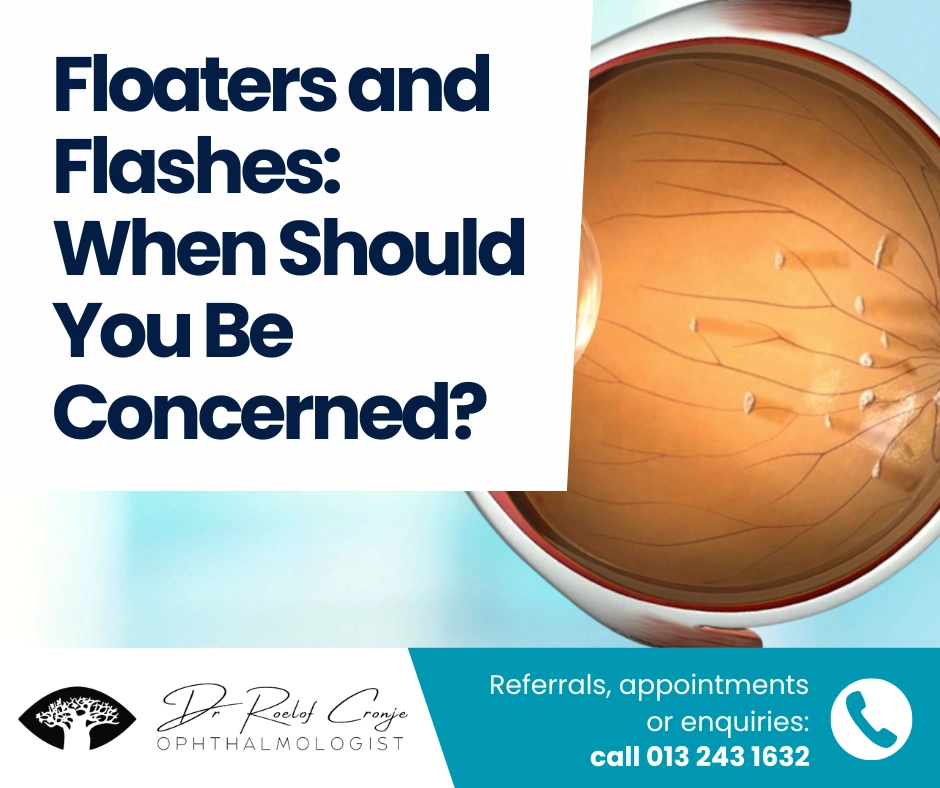
Floaters and flashes are common eye phenomena that most of us experience occasionally. They’re usually harmless, but sometimes they can signal an urgent eye condition that needs immediate attention. Let’s explore what causes floaters and flashes, when they’re normal, and when they might be a cause for concern.
What Are Floaters?
Floaters appear as tiny spots, lines, or cobweb-like shapes drifting across your vision. These shadows are caused by small clumps or strands in the vitreous—the gel-like substance that fills the eye. As light enters the eye, these clumps cast shadows on the retina, creating the appearance of floaters.
What Are Flashes?
Flashes are brief streaks or bursts of light that occur when the vitreous gel pulls or tugs on the retina. This pulling can stimulate the retina’s light-sensitive cells, resulting in the perception of flashes of light.
When Are Floaters and Flashes Normal?
Floaters and flashes are often associated with the natural aging process. Over time, the vitreous shrinks and becomes more liquefied, a process called posterior vitreous detachment (PVD). PVD is usually harmless but can lead to a temporary increase in floaters or flashes.
Signs You Shouldn’t Ignore
While occasional floaters and flashes are typically benign, certain changes in your vision should prompt an immediate visit to an eye specialist:
- Sudden Onset of Numerous Floaters
A sudden increase in floaters, especially if paired with flashes, could indicate a retinal tear or detachment. - Peripheral Vision Loss
If you notice a shadow or curtain-like effect in your peripheral vision, it could be a sign of retinal detachment, a serious condition requiring urgent care. - Persistent Flashes
Flashes that occur frequently or do not subside may signal an underlying issue, such as a migraine aura or retinal damage. - Recent Eye Trauma or Surgery
If new floaters or flashes appear after an eye injury or surgery, they should be evaluated promptly.
Retinal Tears and Detachment: What You Need to Know
Retinal detachment happens when the retina separates from the back of the eye, disrupting vision. Common causes include:
- Severe nearsightedness (myopia)
- Trauma to the eye
- Aging-related changes in the vitreous
- Previous eye surgeries
Symptoms of retinal detachment may include a sudden increase in floaters, flashes, or a curtain-like shadow over your vision.
Seeking Treatment
If you notice any of the concerning signs mentioned above, a comprehensive eye exam is essential. At Dr. Cronje’s practice, we use advanced diagnostic tools to assess the retina and vitreous. Depending on the findings, treatment may include:
- Cryotherapy: Freezes the affected area to secure the retina.
- Vitrectomy: A surgical procedure to address more severe retinal detachments.
Protecting Your Vision
Regular eye check-ups are critical to maintaining healthy vision, especially as we age. If you experience sudden floaters, flashes, or changes in vision, don’t delay seeking professional advice. Early intervention can make all the difference in preserving your sight.
At Dr. Cronje’s practice, we are dedicated to personalized and thorough eye care. If you’re concerned about floaters, flashes, or any changes in your vision, contact us today to book an appointment.