

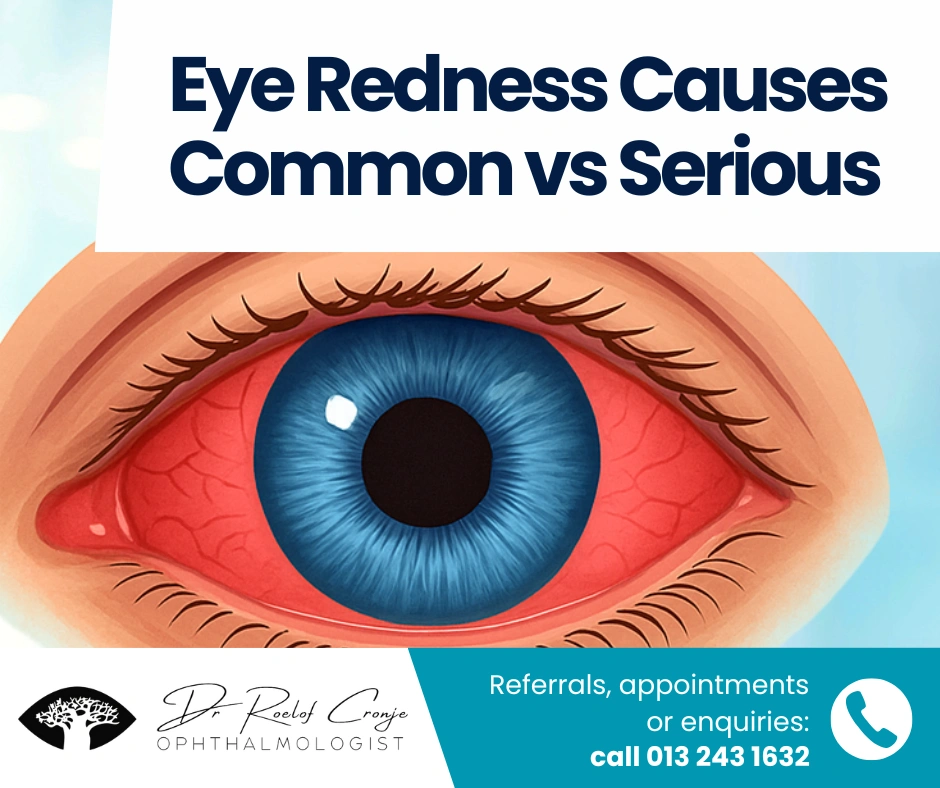
cases are harmless — often caused by allergies, dryness, or viral conjunctivitis — and settle quickly.
But not all red eye causes are simple. Sometimes, that redness is the eye’s way of signalling something deeper: inflammation, infection, or even a sudden rise in eye pressure that could threaten your vision.
Knowing the difference can save sight — and that’s what this article is all about.
Common and Serious Red Eye Causes
There are many red eye causes, and while some only cause irritation or discomfort, others can progress rapidly if left untreated.
| Usually Mild | Potentially Serious |
|---|---|
| Viral or allergic conjunctivitis | Uveitis – inflammation inside the eye |
| Dry-eye irritation | Keratitis – infection or ulcer on the cornea |
| Blepharitis (eyelid inflammation) | Scleritis – deep inflammation of the white of the eye |
| Environmental irritation | Acute angle-closure glaucoma – sudden pressure rise inside the eye |
Conjunctivitis typically causes a gritty, itchy, or watery eye — but it rarely causes pain or blurred vision. If you feel discomfort behind the eye, struggle with bright light, or notice your vision getting worse, that’s a red flag.
When Red Eye Needs Urgent Care
A red eye on its own may not mean much. What matters are the other symptoms that go with it.
Here’s when redness should never be ignored:
- Pain or tenderness: A painful or throbbing eye usually means inflammation deeper than the surface.
- Light sensitivity (photophobia): If bright light makes you squint or tear up, this could point to keratitis or uveitis.
- Blurred or reduced vision: Conjunctivitis rarely affects clarity — so vision loss is a warning sign.
- Corneal changes: White spots, haze, or cloudy patches may indicate infection or ulceration of the cornea.
- Halos, nausea, or headache: These may signal acute glaucoma, a medical emergency that needs same-day care.
If your red eye comes with pain, blurred vision, or light sensitivity — treat it as urgent.
Don’t assume it’s “just pink eye.” A quick check with an ophthalmologist could prevent permanent damage.
Red Eye Flowchart: When to Refer
A simple guide to help you decide when it’s time to get help:

What You Can Do at Home
You don’t need to panic every time your eye turns red — but you should know when to act and when to rest it.
If your eye feels mildly irritated:
- Rinse with preservative-free artificial tears or saline.
- Avoid rubbing or touching your eyes.
- Rest your eyes from screens and wind exposure.
If the redness is severe or painful:
- Do not use leftover or over-the-counter antibiotic drops.
- Avoid contact lenses until a doctor confirms it’s safe.
- Don’t delay an appointment — some conditions worsen within hours.
Understanding Why Early Care Matters
Your eyes are delicate, and conditions like keratitis, uveitis, or glaucoma can escalate quickly. In many cases, the difference between full recovery and long-term vision loss depends on how soon treatment begins.
An ophthalmologist uses specialised equipment to look beyond surface redness — checking the cornea, anterior chamber, and eye pressure to identify what’s truly causing the problem.
So while pharmacies and online advice might help with simple infections, only a thorough examination can rule out something more serious.
When in doubt, it’s better to get checked — especially if you only have one good eye or wear contact lenses.
Key Takeaway
Most eye redness causes are minor, but a small number can threaten vision. If your red eye comes with pain, light sensitivity, or blurred vision, it’s worth a proper examination.
Red eyes may look similar — but not all are equal. A professional diagnosis protects both your comfort and your sight.