
taracts are one of the most common causes of blurred vision, particularly as people get older. While hearing the diagnosis can be worrying, cataracts are also one of the most treatable eye conditions, and modern cataract surgery is highly successful.
One of the first questions patients ask is:
“When should cataracts actually be removed?”
The answer is simpler than many people expect. Cataracts are usually removed when they begin to interfere with your vision and your daily activities. In other words, surgery is recommended when cataracts start affecting the way you live your life.
Understanding how cataracts develop and the symptoms they cause can help you recognise when it may be time to consider treatment.
What Are Cataracts?
Inside the eye is a natural lens that focuses light onto the retina, allowing us to see clearly. In a healthy eye, this lens is completely transparent.
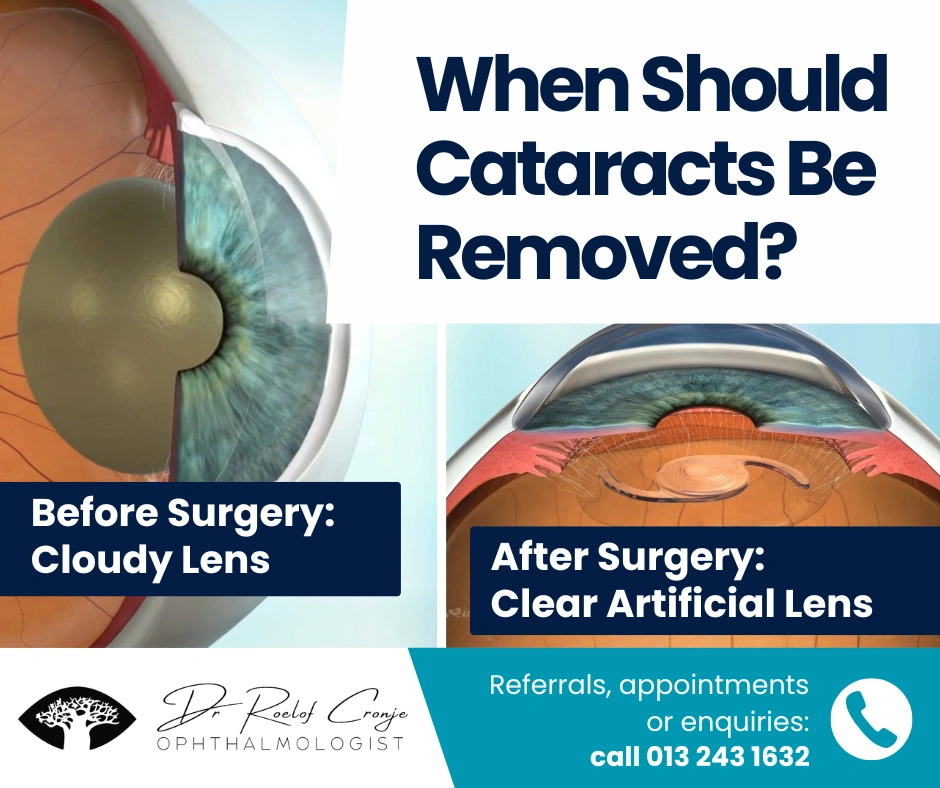
A cataract develops when the lens becomes cloudy or opaque, preventing light from passing through clearly. Instead of sharp images forming on the retina, the vision becomes blurred or hazy.
Many patients describe the sensation as:
- Looking through a foggy window
- Viewing the world through a smudged lens
- Colours appearing dull or faded
Cataracts usually develop slowly over time, which is why symptoms often appear gradually.
What Causes Cataracts?
The most common cause of cataracts is ageing of the natural lens. Over time, proteins inside the lens begin to break down, leading to clouding.
However, several factors can increase the risk of cataracts developing earlier or progressing faster:
- Diabetes
- Long-term steroid medication
- Smoking
- Excessive exposure to sunlight
- Previous eye injuries
- Certain genetic conditions
Most people begin developing cataracts after the age of 60, although they can occur earlier in some individuals.
Cataract Symptoms: How Do You Know If You Have One?
In the early stages, cataracts may cause very few symptoms. As they progress, patients may begin noticing several visual changes.
Common cataract symptoms include:
Blurred or Cloudy Vision
Vision may gradually become less sharp, making reading or recognising faces more difficult.
Glare or Halos Around Lights
Headlights, streetlights, or bright indoor lights may appear unusually bright or surrounded by halos.
Difficulty Driving at Night
Night driving is often one of the first activities affected by cataracts.
Colours Looking Faded
Colours may lose their brightness and appear slightly yellow or dull.
Frequent Changes in Glasses
If your glasses prescription keeps changing but your vision still isn’t improving, cataracts may be responsible.
When Should Cataracts Be Removed?
Cataracts do not always need to be removed immediately after they are diagnosed.
In most cases, cataract surgery is recommended when vision problems begin to affect daily activities or reduce quality of life.
Your ophthalmologist may recommend surgery if cataracts begin to interfere with:
- Driving safely
- Reading comfortably
- Working or using screens
- Recognising faces
- Enjoying hobbies and daily activities
The decision to proceed with surgery is therefore based on how much the cataract affects your life, not simply how it looks during an eye examination.
Signs You May Need Cataract Surgery
There are several common signs that cataracts may be ready for treatment.
Driving Has Become Difficult
Many patients first notice problems when driving at night. Glare from headlights can make it harder to see clearly.
Reading Is Becoming More Difficult
Even with updated glasses, reading may become more challenging as cataracts progress.
Bright Light Feels Uncomfortable
Sensitivity to sunlight or indoor lighting is a common symptom.
Your Vision Is Affecting Daily Life
If vision changes are stopping you from doing things you normally enjoy, cataract surgery may help restore clarity.

Do Cataracts Need to Become “Very Bad” Before Surgery?
No.
Years ago, doctors often waited until cataracts became very dense before removing them. With modern surgical techniques, this is no longer necessary.
In fact, performing surgery before cataracts become extremely advanced can make the procedure easier and improve recovery.
Today, cataract surgery is usually recommended once symptoms begin to affect vision and quality of life.
What Happens During Cataract Surgery?
Cataract surgery is a quick and highly effective procedure that replaces the cloudy lens with a clear artificial lens.
The procedure usually takes 15 to 20 minutes and is performed under local anaesthetic with light sedation.
During surgery:
- A very small incision is made in the eye
- The cloudy lens is gently broken into tiny pieces
- The fragments are removed
- A clear artificial lens is placed in the eye
Most patients go home on the same day.

Cataract Surgery Recovery
Recovery from cataract surgery is typically fast.
Many patients notice improved vision within a few days, although the eye may take several weeks to fully heal.
Recovery usually includes:
- Using eye drops for a few weeks
- Avoiding strenuous activity for a short period
- Attending follow-up appointments
Most patients experience clearer, brighter vision and improved quality of life after surgery.
When Should You See an Eye Specialist?
If you notice changes in your vision, it is important to have a comprehensive eye examination.
You should consider seeing an ophthalmologist if you experience:
- Persistent blurred vision
- Difficulty driving at night
- Increasing glare or halos around lights
- Frequent changes in glasses
- Vision problems affecting daily life
An examination can determine whether cataracts are present and whether surgery may help restore clear vision.
Restoring Clear Vision
Cataracts are a natural part of ageing, but they do not have to permanently affect your sight.
Modern cataract surgery can restore clear vision and help patients return to activities such as reading, driving, and enjoying everyday life.
If you are experiencing symptoms of cataracts, an eye examination can determine whether surgery may benefit you and when the timing is right.