
People living with diabetes are at higher risk of developing several eye conditions, including cataracts. While cataracts are commonly associated with ageing, individuals with diabetes often develop them earlier and sometimes more rapidly than people without diabetes.
Understanding the relationship between cataracts and diabetes is important because early detection and proper eye care can help protect vision and improve long-term outcomes.
What Are Cataracts?
A cataract occurs when the natural lens inside the eye becomes cloudy.
The lens sits behind the iris and focuses light onto the retina so that we can see clearly. When the lens becomes cloudy, light cannot pass through properly and vision may appear:
- Blurred
- Hazy
- Dimmer than normal
- Less colourful
Many patients describe cataracts as feeling like they are looking through a foggy window or a smudged pair of glasses.
Why Does Diabetes Increase the Risk of Cataracts?
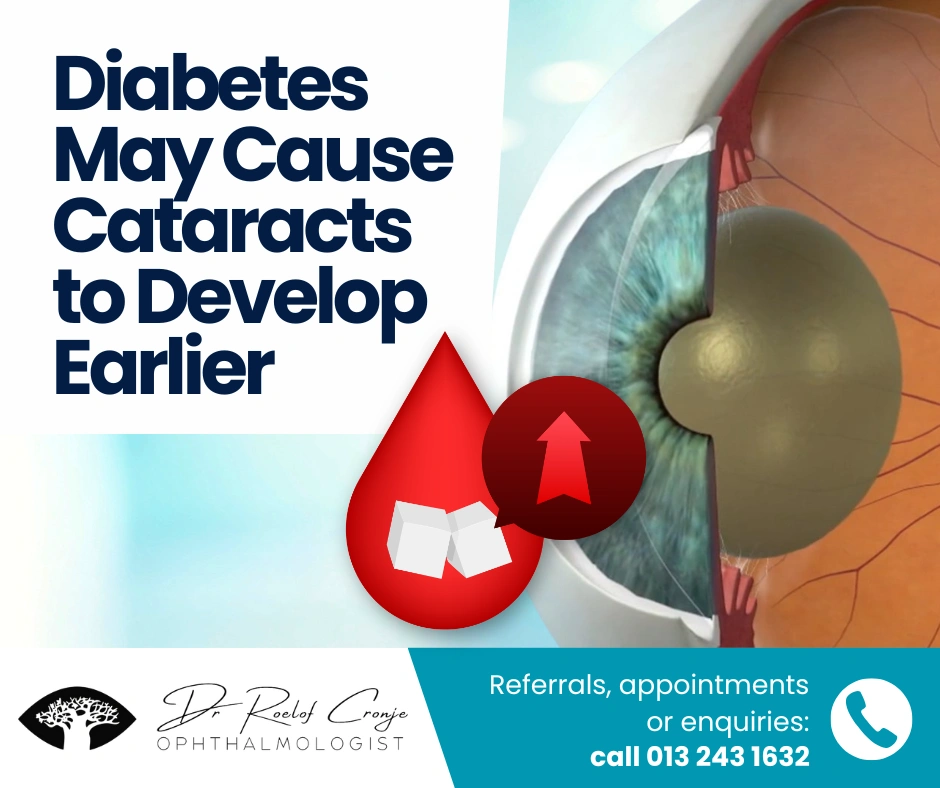
Diabetes can affect the eyes in several ways. Persistently elevated blood sugar levels can cause biochemical changes within the lens, which may contribute to earlier cataract formation.
In people with diabetes, glucose can enter the lens and lead to changes in lens metabolism and protein structure. These changes may cause the lens to lose its transparency over time.
As a result, people with diabetes may:
- Develop cataracts at a younger age
- Experience faster progression of cataracts
- Require earlier monitoring and treatment
Maintaining good blood sugar control plays an important role in supporting overall eye health.
Symptoms of Cataracts in People with Diabetes
The symptoms of cataracts in people with diabetes are generally similar to those seen in other patients.
Common cataract symptoms include:
Blurred or Cloudy Vision
Objects may appear less sharp and details become harder to see.
Increased Glare Around Lights
Headlights, streetlights, or bright indoor lighting may cause glare or halos.
Difficulty Driving at Night
Night driving may become uncomfortable or unsafe due to reduced contrast and glare.
Colours Appearing Faded
Colours may appear duller or slightly yellow.
Frequent Changes in Glasses Prescription
Some patients notice their glasses prescription changing more frequently.
Cataracts vs Diabetic Eye Disease
It is important to remember that cataracts are not the only eye condition associated with diabetes.
Diabetes can also damage the retina, leading to diabetic retinopathy, which affects the blood vessels at the back of the eye.
The key difference is:
- Cataracts affect the lens at the front of the eye.
- Diabetic retinopathy affects the retina at the back of the eye.
Some patients may have both conditions at the same time, which is why a comprehensive eye examination is essential when vision changes occur.
When Is Cataract Surgery Recommended for Diabetic Patients?
Cataract surgery is usually recommended when cataracts begin to affect daily activities or quality of vision.
This may include difficulty with:
- Driving
- Reading
- Using digital screens
- Recognising faces
- Performing work tasks
In people with diabetes, cataract surgery may also be recommended when the cataract prevents the ophthalmologist from clearly examining the retina.
Special Considerations Before Cataract Surgery
Before cataract surgery, patients with diabetes often require careful evaluation of the retina.
Your ophthalmologist may assess for:
- Diabetic retinopathy
- Macular oedema
- Other retinal conditions
Treating retinal disease before or alongside cataract surgery may help improve visual outcomes.
Good blood sugar control before surgery is also important for optimal healing and recovery.
Is Cataract Surgery Safe for People with Diabetes?
Cataract surgery is one of the most commonly performed and successful procedures worldwide.
For most patients with diabetes, cataract surgery is safe and effective. However, the final visual outcome may depend on the health of the retina.
Patients with diabetic retinal disease may require additional monitoring after surgery to ensure optimal recovery.
Can Cataracts Be Prevented in Diabetes?
Cataracts cannot always be prevented, but certain steps may help reduce the risk or slow their progression.
These include:
- Maintaining good blood sugar control
- Attending regular diabetic eye examinations
- Protecting the eyes from excessive UV exposure
- Avoiding smoking
- Managing blood pressure and cardiovascular health
Regular eye care is one of the most important ways people with diabetes can protect their vision.
When Should Someone with Diabetes Have an Eye Examination?
People living with diabetes should have regular eye examinations, even if they do not notice vision problems.
You should consider seeing an ophthalmologist if you experience:
- Gradually worsening vision
- Increased glare or halos around lights
- Difficulty driving at night
- Frequent changes in glasses prescription
Early detection of cataracts and diabetic eye disease allows treatment to begin before significant vision loss occurs.
Protecting Your Vision with Diabetes
Diabetes does not mean vision loss is inevitable. With proper medical care, regular eye examinations, and good blood sugar control, many people maintain healthy vision for many years.
Understanding how cataracts and diabetes are connected allows patients to take proactive steps to protect their eyesight and seek treatment when necessary.